
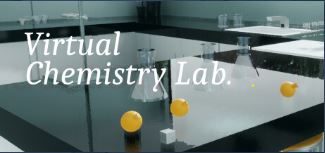
Virtual Chemistry Lab
Virtual Chemistry Lab
A solo-developed "serious game" for high school chemistry, covering 13 experiments across point-and-click and physics-based VR modes. Built with an explicit mission: give every student access to a chemistry lab, regardless of whether their school has one.
What Is It?
Virtual Chemistry Lab is a "serious game" developed entirely by a single independent developer, Alpay Akay, and released on Steam in early access in February 2023. It is designed specifically for high school chemistry students, with the explicit aim of covering the full high school chemistry curriculum through a combination of interactive experiments and physics-based VR simulations.
What makes this app philosophically distinctive — and worth understanding — is the developer's core motivation. Alpay Akay explicitly designed Virtual Chemistry Lab to address educational inequality: the recognition that VR hardware is expensive and inaccessible in many countries, and that a fully capable chemistry lab experience should be available to students regardless of whether their school can afford specialist equipment. The app therefore runs on keyboard and mouse as well as in VR, making it accessible to any student with a basic PC.
The scope is ambitious for a solo project: 13 experiments spanning both point-and-click and physics-based interaction modes, covering topics from across the high school chemistry curriculum, with trial-and-error mechanics that allow mistakes to produce realistic outcomes.
Two Modes, Thirteen Experiments
The app is structured around two distinct interaction modes, which also serve the developer's accessibility mission — the point-and-click mode works with just a keyboard and mouse, while the physics-based mode is the VR experience.
The Accessibility Mission
Alpay Akay's stated goal deserves to be quoted directly: "My aim is to produce solutions where the possibilities offered by technologies such as VR, which are expensive for most countries, can be reached by wider audiences such as keyboards and mouse."
This is a genuinely unusual position in the VR education space. Most educational VR apps are built on the assumption that the hardware will be provided — by a school, a library, or a parent. Virtual Chemistry Lab is explicitly designed for contexts where that assumption doesn't hold: students in countries where VR headsets are a luxury, students learning at home without school resources, and schools without the budget for physical lab equipment.
By supporting keyboard and mouse as a first-class input mode — not just as a fallback — the developer has made a deliberate choice to prioritise access over immersion. That choice has real consequences for who can use the app, and it's one worth understanding when deciding whether it fits your context.
Chemistry Content & Topics
The stated scope covers the entire high school chemistry curriculum, though the early access state means not all content is yet complete. Current experiments span a range of standard secondary-level topics:
A Candid Assessment
This review requires unusual candour. Virtual Chemistry Lab has a genuine and admirable educational mission, and a solo developer creating 13 chemistry experiments with real physics simulation deserves respect. But the current state of the project also needs to be stated clearly.
Where This Fits in the Chemistry VR Landscape
Virtual Chemistry Lab occupies a different niche from the other chemistry apps reviewed on this site. Tablecraft is a sandboxed periodic table game, VLab Education is a free Quest lab simulator by practising chemists. Virtual Chemistry Lab is a PC application with a desktop-first design philosophy.
Its most natural use case is as a home study tool — particularly for students in lower-resourced educational settings who don't have access to a school chemistry lab at all, or for independent learners working outside a traditional school environment. The keyboard-and-mouse mode makes it accessible on any modest Windows PC without any specialist hardware investment.
For UK schools with Meta Quest headset fleets, Tablecraft or VLab Education will be more practical choices. For contexts where PC access is the reality and Quest hardware isn't available, Virtual Chemistry Lab is worth awareness — provided the current development pause is understood.
XR School Scores
Virtual Chemistry Lab is a solo passion project with an admirable educational mission — building chemistry lab access for every student regardless of what equipment their school has. The keyboard-and-mouse mode is a genuinely meaningful accessibility feature that distinguishes it from every other app in this chemistry series. But it is an early access application on Steam whose development appears to have stalled, with planned curriculum content undelivered and no recent updates. For UK schools with Meta Quest headsets, Tablecraft or VLab Education are more practical and actively maintained alternatives. For educators working in lower-resourced settings where PC access is more realistic than VR hardware, Virtual Chemistry Lab deserves awareness — but go in with clear eyes about its current state.
If your school runs Quest headsets, these alternatives are directly compatible and actively maintained: