Astronomy

Shuttle Commander

The XR SchoolScienceAstronomy › Shuttle Commander
NASA
$9.99 Meta Quest • Steam • PSVR Original NASA audio • Hubble missions Immersive VR Education • Apollo 11 VR team
Immersive VR Education • Also: Apollo 11 VR, Titanic VR • Original NASA cockpit audio • Physics landing at KSC • Canadarm • Science visualisation

Shuttle Commander

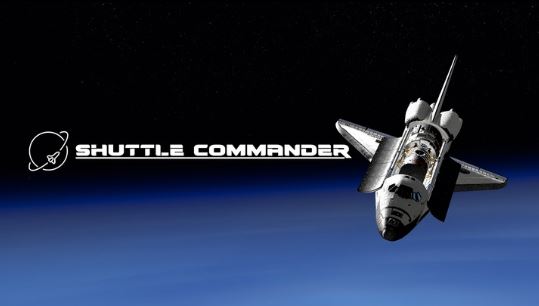
Sit in the cockpit of Discovery and watch the Hubble Space Telescope rise from the payload bay. Use the Canadarm to capture and service the most important scientific instrument in history. Navigate a physics-based landing at Kennedy Space Centre, White Sands, or Edwards Air Force Base — using original NASA audio captured from the actual missions. From the studio behind Apollo 11 VR and Titanic VR, this is the definitive Space Shuttle experience in VR.

Developer: Immersive VR Education
Price: $9.99
Platform: Meta Quest • Steam • PSVR
Focus: Hubble Space Telescope missions
8.0
/10
XR School Score
Highly Recommended
Definitive Shuttle/Hubble VR experience • $9.99 • Meta Quest standalone • Original NASA audio • Physics landing • Canadarm • Science visualisation • Immersive VR Education pedigree
Meta Quest standalone Original NASA cockpit audio
Immersive VR Education
Overview

Shuttle Commander comes from Immersive VR Education, an Irish studio with an established track record in historically grounded VR experiences: Apollo 11 VR put users on the surface of the Moon, and Titanic VR placed them inside the wreck. Shuttle Commander brings the same philosophy to the Space Shuttle programme, with a specific and well-chosen focus: the Hubble Space Telescope missions. Rather than attempting to cover the entire 135-mission, 30-year Shuttle era in a single experience, the developers have zeroed in on one of the programme's most significant and scientifically consequential stories.

Players experience the deployment and servicing of Hubble from the cockpit of Discovery, using original NASA cockpit audio recorded during the actual missions. The Canadarm — the remote manipulator system that was one of the Shuttle's defining engineering achievements — is operable in real time, used to capture and manoeuvre the telescope during servicing. After the orbital sections, the experience moves to a physics-based landing simulation at three authentic landing sites: Kennedy Space Centre, White Sands, and Edwards Air Force Base. A third mode uses data from nearly 120,000 stars to produce science visualisation segments exploring the universe's structure and the life cycle of stars.

Why the Hubble Focus Is the Right Editorial Choice The Hubble Space Telescope is arguably the single most scientifically productive instrument in human history. In over 30 years of operation it has produced more than 1.5 million observations, contributed to more than 19,000 peer-reviewed papers, and fundamentally changed our understanding of dark energy, galaxy formation, stellar evolution, and the age of the universe. The fact that it was initially nearsighted and had to be repaired by astronauts in a spacewalk that required five days of extravehicular activity is itself one of the great engineering stories of the 20th century. By centring Shuttle Commander on Hubble rather than on the Shuttle as a generic flying machine, Immersive VR Education has created an experience with a clear scientific and historical narrative rather than a general-purpose simulator.
Experience Modes
🚀
Hubble Launch & Deployment
Experience the 1990 launch of the Hubble Space Telescope from Discovery's cockpit using original NASA mission audio. Watch the telescope emerge from the payload bay and deploy into orbit 568 kilometres above Earth.
🤖
Canadarm Operations
Take control of the Remote Manipulator System and manoeuvre Hubble during servicing missions. The Canadarm is one of the defining technologies of the Shuttle programme and is fully interactive in the experience.
Physics-Based Landing
Land the Shuttle at Kennedy Space Centre, White Sands, or Edwards Air Force Base using accurate flight dynamics. Approach angle, speed, and weight distribution all matter — the Shuttle lands like a brick and doesn't get second chances.
🌟
Science Visualisation
Dataset-driven exploration of stellar structure, the life cycle of stars, and the constellations of our solar system using data from nearly 120,000 stars. An astronomy lesson embedded within the mission experience.
Original NASA Audio: What It Adds The use of actual NASA cockpit audio from the Hubble missions is the detail that separates Shuttle Commander from a generic space simulator. When students hear the voices of the Discovery crew communicating with Mission Control during the real deployment sequence, they are not experiencing a dramatisation but the actual human experience of those moments. The audio includes the characteristic calm of professional astronauts managing complex operations under genuine risk, which is itself a useful reference point for discussions about human factors in high-stakes technical environments. No synthetic voice acting achieves the same effect.
Curriculum Links
🌐
Astronomy
The Hubble Space Telescope's scientific contributions, orbital mechanics of the Shuttle programme, stellar evolution visualisation using real star catalogue data, and the physics of low Earth orbit.
Physics / Engineering
Shuttle aerodynamics and the unpowered landing challenge, remote manipulator systems (Canadarm), telescope optics and the spherical aberration repair, and orbital insertion physics.
📚
History of Science
The political context of the Space Shuttle programme, the story of Hubble's defective mirror and the repair mission, and the role of international collaboration (Canadarm was Canadian) in spaceflight.
📈
STEM Inspiration
The Hubble programme as a demonstration of what sustained scientific investment produces: 1.5 million observations, 19,000+ papers, and a fundamentally revised understanding of the universe's age and structure.
Assessment
Historical / scientific authenticity
9.0
Immersion / presence
8.6
School deployment ease (Quest)
8.8
Value for money
9.0
Curriculum depth
8.2
Strengths and Considerations
Strengths
  • Meta Quest standalone — no PC required
  • Original NASA mission audio from actual Hubble flights
  • Interactive Canadarm operations in orbit
  • Physics-based landing at three authentic sites
  • Science visualisation from 120,000-star dataset
  • Focused narrative (Hubble) rather than generic Shuttle sim
  • Immersive VR Education pedigree (Apollo 11 VR, Titanic VR)
  • $9.99 — excellent value for content depth
  • Multi-platform: Meta Quest, Steam, PSVR
  • Narrated educational commentary throughout
  • Considerations
    • No free demo (unlike Go For Launch: Mercury)
    • Landing simulation has a steep difficulty curve
    • Hubble-only focus means other Shuttle missions not represented
    • Version 0.64 — still below 1.0 release milestone
    Pairing Shuttle Commander With Go For Launch: Mercury Both titles reviewed in this Astronomy section cover different eras of American spaceflight. Mercury (Go For Launch) is the raw, stripped-down beginning — one man in a tiny capsule on top of a converted missile. Shuttle Commander is the mature era of reusable spaceflight — a crew vehicle the size of a commercial aircraft performing precision science operations at 28,000 km/h. Deploying both in sequence in a History of Space Exploration lesson creates a genuinely powerful narrative arc from 1961 to 1990, with the Moon landing implicitly positioned between them. At $9.99 each, combined cost is $19.98 for two of the most historically grounded spaceflight experiences available on VR.
    $9.99
    Meta Quest (all models) • Steam • PSVR • No PC required for Meta Quest
    Get on Meta Quest → Get on Steam →
    Quick Facts
    Developer
    Immersive VR Education
    Also made
    Apollo 11 VR • Titanic VR
    Price
    $9.99
    Platform
    Meta Quest (all) • Steam • PSVR
    Focus
    Hubble Space Telescope missions
    NASA audio
    Original mission cockpit audio
    Modes
    Launch/deploy • Canadarm • Landing • Science viz
    Landing sites
    KSC • White Sands • Edwards AFB
    Star data
    ~120,000 stars • Real dataset
    Best for
    Astronomy, Physics, History of Science
    Verdict
    Shuttle Commander is the strongest standalone astronomy VR experience in this section for Meta Quest schools. Immersive VR Education's track record, the authentic NASA audio, the interactive Canadarm, the physics landing, and the science visualisation mode combine into a package with genuine curriculum depth at an accessible price. The Hubble focus gives it a scientific narrative that a generic Shuttle simulator would lack. At $9.99 on Meta Quest standalone, there is no meaningful barrier to deployment. For schools that also have Go For Launch: Mercury, pairing both creates a coherent history of American spaceflight arc that stands as some of the most powerful curriculum VR available.