
SpaceEngine
SpaceEngine
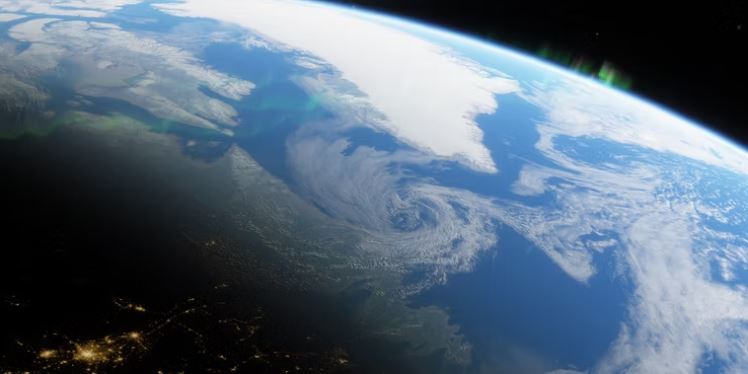
A 1:1 scale science-based universe simulator. Every star in the Hipparcos catalogue, every known galaxy, every charted celestial body represented with scientific accuracy — and then procedural generation extending outward through billions of uncharted systems, each with its own terrain, atmosphere, and physical properties. Land on a neutron star, orbit a black hole with an animated accretion disc, or fly a spacecraft with Newtonian physics between the planets of a distant solar system that no human has ever seen. All from a single developer.
500k–1M Steam owners
SpaceEngine is the most ambitious astronomy software ever produced by a single developer. Vladimir Romanyuk began building it in 2010 as a free tool and released it commercially through Steam in 2019, now under the Cosmographic Software label. It has since accumulated over 16,000 reviews at an Overwhelmingly Positive rating, with somewhere between 500,000 and one million Steam owners — community scale that would be remarkable for any studio product, and is extraordinary for a solo-developer scientific simulator.
The premise is simply stated: a 1:1 scale model of the universe. Known objects — the full Hipparcos stellar catalogue, the NGC/IC galaxy catalogues, all known planets and moons of the solar system, all known exoplanets, star clusters, nebulae, and other catalogued bodies — are represented with their real physical properties. Beyond the edges of the known, SpaceEngine generates procedurally: billions of star systems, each with planets whose geology, atmosphere, and terrain are physically plausible rather than arbitrary. If you can see it, you can travel to it. If you travel to a procedural planet, you can land on its surface and walk across terrain generated to match its mass, composition, and distance from its star.
SpaceEngine's curriculum value spans multiple subjects and year groups. At its most immediate it is an astronomy and physics tool: the accurate representation of stellar spectral types, orbital mechanics, atmospheric physics, and cosmological scale gives teachers concrete, visually compelling reference material for topics that are otherwise abstract. A student who has flown from Earth to the Sun to Jupiter to the nearest star system in SpaceEngine has an intuitive grasp of interplanetary and interstellar distances that no diagram can provide.
- Overwhelmingly Positive • 96/100 • 16,072 Steam reviews
- 1:1 scale universe — the most ambitious astronomy simulator available
- Hipparcos catalogue • NGC/IC galaxies • All known solar system bodies
- Black hole accretion discs • Relativistic jets • Physically accurate lensing
- Newtonian spacecraft with orbital mechanics
- Time acceleration: observe stellar and orbital dynamics across millennia
- Actively maintained (Dec 2025 stable release)
- Active modding community • Extensible with add-ons
- 2D desktop mode: works on any PC without VR headset
- 20+ interface languages
- VR support partial and work-in-progress — not a polished VR experience
- PC only — not on Meta Quest standalone
- $29.99 — higher price point than other tools in this section
- Steep learning curve for new users — teacher prep essential
- No guided narrative or curriculum-aligned content structure
- Still in extended Early Access (v0.991) — formally pre-1.0
- High PC spec requirements for smooth performance
- Developer
- Cosmographic Software • Vladimir Romanyuk
- Price
- $29.99 (Steam) • HD DLC packs extra
- Platform
- PC (SteamVR / Oculus PC) • VR partial
- Steam rating
- Overwhelmingly Positive • 96/100
- Reviews
- 16,072 Steam reviews
- Owners
- 500,000–1,000,000 (Steam)
- Latest stable
- 0.991.49.2095 (Dec 2025)
- Catalogues
- Hipparcos • NGC/IC • All known solar bodies
- Languages
- 20+ interface languages
- Best for
- Astronomy • Physics • KS3–Post-16