
art

Paint To Pixel

The XR SchoolHumanitiesArt › Paint to Pixel
Free (Meta Quest) UK graffiti • 60 years 5 galleries • Artist interviews ⚠ Covers illegal activity (train writing)
UK VR documentary exhibition • Personal photo archives • Anonymised artists • Train journey between galleries

Paint to Pixel

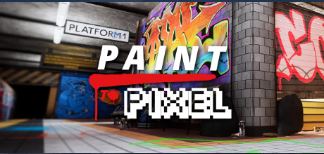
A VR documentary exhibition charting 60 years of UK graffiti history. Graffiti-covered trains carry you between five galleries, each exploring a different era or aspect of the culture — from its New York origins to UK train writing, street art in popular culture, and the future of the art form. Artist interviews and personal photo archives throughout, with many contributors anonymised.

Format: VR documentary exhibition
Price: Free (Meta Quest) • Low cost (Steam)
Platform: Meta Quest • Steam
Galleries: 5 • 60 years of UK graffiti
⚠ Content note for teachers: Paint to Pixel covers the illegal aspects of graffiti writing — specifically train writing in the 1980s and 1990s — including interviews discussing criminal records, the lengths the legal system goes to deter writers, and first-person accounts of illegal activity. The exhibition frames this as documentary history rather than glorification, and many contributing artists are anonymised due to the ongoing legal sensitivity of their work. Teachers should review the gallery content before use, particularly the Illegal Art of Train Writing gallery, and frame the material within a clear cultural history and arts education context.
7.5
/10
XR School Score
Recommended
Free on Meta Quest • Unique UK street art history content • Marginalised artist voices • Train-as-gallery-transport concept • Strong Art History / Media Studies curriculum links • Illegal activity content needs teacher framing
Free (Meta Quest) 5 galleries • 60 years
Artist interviews throughout
Overview

Paint to Pixel is a VR documentary exhibition rather than a painting tool — it sits in a different category from Vermillion and Painting VR in this Art section. Rather than giving you brushes and a canvas, it places you inside a curated historical journey through six decades of UK graffiti culture, told through artist interviews, personal photo archives, and artefacts, with whole-car graffiti-covered trains as the transport mechanism between galleries.

The decision to use Graff Central station and graffiti trains as the exhibition's structural device is itself a curatorial statement: the experience of travelling to the galleries on a train covered in original whole-car art is an immersive framing that no physical gallery could replicate. The artists whose work covers those carriages are part of the exhibition's subject matter. Because many contributing artists cannot be publicly named due to the ongoing legal implications of their work, the exhibition carries a specific kind of authenticity: it exists precisely because VR offers a space where marginalised voices can share their own story without legal exposure.

Marginalised Voices and the Art/Crime Line The official Meta store description is explicit about this: "Paint to Pixel allows marginalised artists to share their own story. It is one that crosses seamlessly between large scale public artworks and the illegal roots of the culture. Because of the nature of their work many artists have chosen not to be named, but each has made a valuable contribution to this exhibition and the wider street art scene." For Art History, Media Studies, or PSHE teachers working on questions of who gets to tell cultural stories and through what channels, this is a ready-made discussion point embedded in the exhibition's own framing.
The Five Galleries
Curriculum Links
🎨
Art History & Critical Studies
60-year arc of a contested art form from illegal subculture to gallery recognition. Questions of what constitutes legitimate art. GCSE and A-Level Art Critical Studies, contextual studies.
📄
Media Studies
How marginalised cultural voices use different platforms (VR, documentary, public walls) to tell their own story. Anonymity as editorial choice. The exhibition itself as a media artefact.
Citizenship / PSHE
Who decides what is art? Who decides what is crime? The legal response to train writing and its human consequences. Marginalised communities and cultural expression. Identity and artistic voice.
🌎
Cultural Geography
How a New York urban art form travels to British cities and adapts to a different cultural and legal context. Urban space, public art, and the politics of the built environment.
Curriculum Value
Art History / Critical Studies
8.8
Media Studies curriculum
8.4
Unique UK-specific content
9.2
Value (free)
9.6
Creative tools / making
4.0
Exhibition, Not Studio: This Is a Viewing Experience, Not a Making One Paint to Pixel does include VR tools to create your own graffiti art within the experience, but this is a secondary feature. The exhibition's primary value is as a curated documentary journey through UK graffiti history, not as a creative sandbox. Teachers who want students to actively make VR art should deploy Vermillion or Painting VR for that purpose. Paint to Pixel is best used as a contextual stimulus before or after a practical art or media studies unit — exploring the culture, history, and critical questions around street art before students engage with their own creative work.
Strengths and Limitations
Strengths
  • Free on Meta Quest — zero cost to access
  • Unique UK-specific street art history content in VR format
  • Primary source interviews with working artists
  • Graffiti train transport concept is a genuine curatorial innovation
  • Marginalised artist voices at the centre of the story
  • 5 galleries covering 60 years of cultural history
  • Strong Art History, Media Studies, Citizenship curriculum links
  • Banksy gallery provides a recognised name anchor for discussion
Considerations
  • Covers illegal activity (train writing) — teacher framing required
  • Many artists anonymised — limits deeper individual attribution
  • Documentary exhibition, not a creative studio tool
  • Limited community review data (thin Steam discussion)
  • VR graffiti creation tools are secondary, not the main content
Free
Meta Quest • Also on Steam
Get on Meta Quest (free) → View on Steam →
Quick Facts
Format
VR documentary exhibition
Price
Free (Meta Quest) • Low cost (Steam)
Platform
Meta Quest • Steam
Galleries
5 (60 years UK graffiti history)
Content
Artist interviews • Photo archives
Transport
Whole-car graffiti train between galleries
Notable gallery
Dedicated Banksy gallery (Gallery 4)
Content note
Covers illegal train writing • Teacher review needed
Verdict
A genuinely distinctive free VR exhibition with no equivalent in the school Art and Media Studies landscape. The UK-specific focus, primary source artist interviews, and curatorial use of graffiti-covered trains as gallery transport make this something no textbook or documentary video can replicate. The illegal activity content in Gallery 2 requires teacher framing, but within a properly contextualised Art History, Critical Studies, or Media Studies lesson, it is a powerful and rare resource — a community-produced documentary where the subjects control their own story. Free, accessible, and culturally specific in ways that make it useful alongside Vermillion's practical painting focus as a complementary contextual resource.