Overview
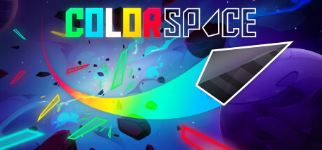
Color Space is developed by Lighthaus Inc, with VR artist Danny Bittman serving as creative director and composer, and was one of the earliest titles to prove that the VR coloring-book concept could be genuinely compelling. Released on Meta Quest and Oculus Rift, it positions itself as "the first virtual reality coloring book" and has grown from its original 10 worlds to 32, with developer updates bringing new books and scenes over time.
The mechanic is deceptively simple: you stand inside a fully three-dimensional world that begins entirely in black and white. A palette in one hand, a coloring wand in the other. Point at any surface — a rock, a tree, a flower, a planet, a cloud — and click to fill it with your chosen colour, bucket-fill style. The scene expands from there. Color a flower and it blooms. Color a bird and it takes flight. Color a river and it begins to run. The soundscape shifts and deepens as you bring more of the world to life, with Danny Bittman's custom ambient compositions responding to the pattern of your choices.
God-Like But Peaceful: One Reviewer's Perfect Description
One community reviewer on AltLab VR captured the experience with unusual precision: "It's almost God-like as you look at the world around you and begin to paint it to your own liking... This is a game to play when you are not looking for action or challenge. This is a slow, zen, peaceful place to escape to. Like God allowed you into the Garden of Eden and you are the creator." That combination — agency without pressure, creation without judgment, beauty without stakes — is exactly why Color Space works especially well for students who find more competitive or evaluative creative activities anxiety-inducing.
Sample Worlds
🌿
Natural Worlds
Forests, rivers, mountains, seascapes, and botanical gardens. These are the largest category, with Danny Bittman's original worlds (designed in Gravity Sketch and Tilt Brush) forming the foundation.
🌏
Space & Cosmos
Planets revolve, meteors shine, star systems emerge. Several worlds take you through astronomical scales where rivers run between planets and suns rise over alien landscapes.
🤖
Another World (2024 update)
The most ambitious update: a distant planet where flying robots tend strange plants, extract jewels from mountain tops, and pay homage to curious deities. Most immersive and elaborate world yet.
🏠
Inhabited Worlds
Bird houses acquire residents; colour a lamp post and its light turns on; market stalls come alive. More narrative suggestion than purely natural scenes.
How the Animation Works: Coloring Triggers, Not Progress Gates
It's worth clarifying how animation in Color Space actually functions, because it affects how teachers should introduce it. Individual coloring events trigger local animations (the bird flies, the river starts, the flower opens) but the scene does not lock you out until you've completed a specific section. You can color freely in any order. This means there's no "right" way to complete a world and no penalty for an unconventional approach — a design choice that reinforces the app's low-pressure ethos and makes it appropriate for students who find goal-oriented creative tasks stressful.
Accessibility and Curriculum Value
Wellbeing / mindfulness fit
9.0
Accessibility (all ages, SEND)
9.2
Engagement / zen absorption
8.6
Art curriculum (colour, composition)
6.8
Accessibility Highlight: Autism and ADHD Community Responses
One of the most frequently cited testimonials for Color Space comes from a reviewer who notes having autism and ADHD: "I love to see the worlds unfold and it keeps me engaged and focused. Which my worlds usually start out fairly generic and end up a colorful playground... I love the color wheel! This game is so fun to me that I have to pace myself." For SEND coordinators and inclusion leads looking for VR experiences that offer engagement without overwhelming stimulus, clear and predictable cause-and-effect (I colour, something responds), and low-pressure creative expression, Color Space's stationary, low-stakes design is a strong match. No locomotion, no time pressure, no competition, no judgment.
What Users Say
Meta Quest player (autism/ADHD)Accessibility
"I have autism and ADHD. I love to see the worlds unfold and it keeps me engaged and focused. This game is so fun to me that I have to pace myself otherwise I would've finished it when I picked it up a few days ago."
AltLab VR communityZen description
"This is a game to play when you are not looking for action or challenge. This is a slow, zen, peaceful place to escape to. Like God allowed you into the Garden of Eden and you are the creator."
Meta Quest community (main criticism)Content limits
The most consistent complaint across reviews is not about the experience itself but wanting more of it: more worlds, more coloring pages, more scenes, willingness to pay for DLC. Users leaving because they've run out of content is a meaningful signal of engagement quality alongside the limitation.
Meta Quest player (long-term)Developer trust
"Since picking it up there has been two new books added and they're fantastic! The developers appear responsive to feedback and have regularly expanded the world count over time."
Strengths and Limitations
Strengths
- Genuinely distinctive concept — step inside the coloring book
- Animated world responses to coloring — cause-and-effect is immediately satisfying
- Soundscape responds to coloring choices in real time
- Stationary play — minimal space, no motion sickness risk
- No time pressure, no goals, no judgment — pure creative calm
- Strong accessibility for students with ADHD/autism
- 32 worlds (grown from 10 at launch) with ongoing developer updates
- All ages • All Meta Quest models
Considerations
- No locomotion — stationary only, cannot move around scenes
- Colour application is bucket-fill, not freehand painting
- Limited colour palette customisation (no gradient, no layering)
- Content depth finite — most users want more worlds once complete
- No hand tracking support (controller only)
- Tutorial reported buggy for some users around March-April 2024