
Astronomy

Astro VR

Home Science Astronomy Astro VR
🌌
🪐
🌌 Astronomy · Science · Space Simulation · Meta Quest · Steam
JPL Data · 8 Planets · 222 Moons · 6,720 Stars

Astro VR

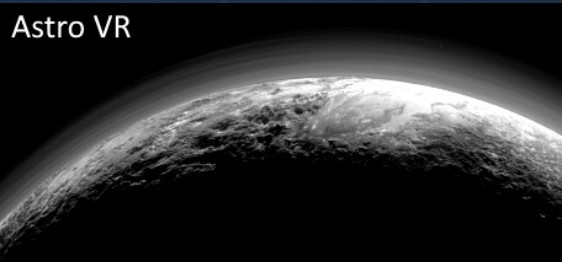
Freely travel through the solar system and beyond in this scientifically accurate VR astronomy simulation. Visit all 8 planets, 222 moons, 91 minor planets, 6,720 stars and their 5,404 exoplanets. Watch orbits tick forward in time using real JPL ephemeris data. Simulate black holes. Hold the entire solar system within arm's length — or zoom to 1:1 scale.

Check store for price Meta Quest Steam · PC VR + flatscreen Light-Year Simulations LLC Released Jun 2024
Meta Store Steam
XR Rating
4.2
⭐⭐⭐⭐
Platform: Meta Quest · Steam (PC VR + flatscreen)  ·  Developer: Light-Year Simulations LLC  ·  Released: June 14, 2024  ·  Data: JPL ephemeris · NASA textures
About the App

What is Astro VR?

Astro VR is a scientifically accurate, freely explorable astronomy simulation for Meta Quest and Steam PC VR, developed by Light-Year Simulations LLC. It puts the entire solar system — and thousands of star systems beyond it — within your grasp. You can travel from an asteroid barely visible to the naked eye all the way to stars so distant their light takes thousands of years to reach us, with every object's position, size, texture and orbit drawn from real scientific data.

Unlike narrated space documentaries or scripted tour apps, Astro VR gives you complete freedom of movement with just two controls — left thumbstick for movement, right for zoom. You choose where to go and what to explore. Separate scale sliders for object size and distance let you view the entire solar system within arm's length, or zoom out until the scale is 1:1, where distances become truly incomprehensible.

What makes VR the right medium for this: Scale is astronomy's defining challenge — the numbers are too large for the human brain to hold. A flat-screen diagram of the solar system is a lie: if the Sun is the size of a basketball, Neptune is 300 metres away. In VR you can experience that distance physically. Zoom out and watch the planets become invisible specks. Then zoom in and hold Jupiter in your hands. That moment of genuine scale comprehension is something no textbook can provide.

The app also works on flat screens with keyboard and mouse — useful if a school has PC VR setups or wants to demonstrate without headsets. Object information and labels can be toggled on or off. The developer is responsive to user feedback and has been actively iterating since the Early Access launch in 2022.

Content

What Can You Explore?

🪐
Solar System
8 planets · 222 moons · 91 minor planets · various spacecraft · Accurate textures from real imagery where available
Star Systems
6,720 stars · 6,096 star systems · 5,404 exoplanets · Correct colour, brightness, size and position from observational data
🌑
Extreme Objects
16 black holes with simulated event horizons, accretion disk rotation, Doppler beaming and gravitational lensing of background stars · 7 neutron stars
⏱️
Time Control
Orbits calculated from JPL ephemeris data — watch moons orbit Jupiter, Earth orbit the Sun, or the entire solar system in fast-forward or reverse
Habitability zones: Calculated for every star system. Exoplanets within the habitable zone are textured appropriately based on size, age and estimated rotation — a genuinely rare feature that makes the search for Earth-like worlds interactive rather than abstract.
Scale tools: Separate sliders for object size and distance let you set any combination — from the entire solar system in arm's reach (1 metre = 2 light years) to 1:1 scale where distances are genuinely staggering. Comparison tools allow size reference against the Sun, Jupiter, Earth and Moon.
User Reviews

What Are Users Saying?

✓ Consistently praised for
Exceptional value for money — users frequently describe it as "worth it" and "cheap for what you get" · Scientific accuracy and photorealistic planetary textures · The "wow factor" of experiencing the true scale of space · Time manipulation feature for watching real orbital motion · Habitability zone data and exoplanet texturing · Works across multiple headsets (Quest 2, HTC Vive, Reverb G2) and flatscreen · Responsive developer who engages with community feedback
⚠️ Common feedback and known limitations
Navigation controls feel confusing initially — easy to get lost in deep space · UI described as "a little rough" by some reviewers · Some users report latency issues with AR features · No surface landing or planetary exploration — orbital viewing only · Can be hard to find specific objects quickly without a search function · Menus could be more intuitive

The overall picture from user reviews is strongly positive for a scientifically minded astronomy audience. The developer has flagged plans to make the menu grab-able and movable based on early feedback — indicating active iteration. The navigation learning curve is real, but users who push through it consistently report the experience as rewarding.

Curriculum Fit

School & Education Value

KS2 (Y5–Y6)
70%
KS3 (Y7–Y9)
88%
GCSE Science / Astronomy
90%
A-Level Physics
80%
Engagement
90%
Ease of use
65%

Astro VR covers content central to the KS3 science curriculum (Earth and Space: planets, orbits, moons, stars) and extends into GCSE Physics and the optional GCSE Astronomy qualification. The time control feature, habitability zones and exoplanet data push it into territory genuinely useful for A-Level Physics and post-16 enrichment. Ease of use is rated 65% — the navigation requires teacher orientation before students use it, and the UI can frustrate younger or less confident users. Recommended for ages 10+ with teacher demonstration first. The flatscreen mode is particularly useful: teachers can mirror the VR view on a screen while one student explores.

Alternatives

How Does It Compare?

Astro VR ← this
Free explore
JPL data
6,720 stars
Black holes
Time control
Cosmic XR
~$9.99
MR passthrough
Hand tracking
Scale focus
More visual
Star Chart
Free
Real-time sky
Constellation ID
Current date
Simpler
Mission: ISS
Free
ISS interior
NASA-accurate
Spacewalk
Guided tour
XR School Verdict
Scientific accuracy10/10
Content breadth10/10
Engagement9/10
Ease of use6/10
Value for money10/10
Bottom line: The most data-rich free-exploration astronomy simulation on Meta Quest — 8 planets, 222 moons, 6,720 stars, 16 black holes, all with real JPL orbital data. The navigation takes getting used to and the UI needs polish, but the scientific depth and "wow factor" are unmatched at the price point. Essential for any KS3–GCSE Astronomy classroom with Quest headsets.
By the Numbers
8
Planets
222
Moons
6,720
Stars
5,404
Exoplanets
91
Minor planets
16
Black holes
7
Neutron stars
6,096
Star systems
Pros & Cons
✓ Exceptional scientific accuracy (JPL data)
✓ 6,720 stars + 5,404 exoplanets to explore
✓ Black holes with real gravitational lensing
✓ Time control for real orbital motion
✓ Habitability zones calculated per star
✓ Scale tools — arm's length to 1:1
✓ Works on flatscreen too
✓ Responsive developer, active updates
✗ Navigation can confuse new users
✗ UI needs polish — no quick search
✗ No surface landing or planetary walkabouts
✗ AR features have latency issues for some
Quick Info
PlatformMeta Quest · Steam
PriceCheck store
DeveloperLight-Year Simulations LLC
ReleasedJune 14, 2024
Data sourceJPL ephemeris · NASA
Flatscreen✓ Keyboard + mouse
AgeAll ages (best 10+)
Best forKS3 · GCSE Astronomy · A-Level
🌌
Get on Meta Store
Astro VR · Meta Quest
💻
Get on Steam
PC VR + flatscreen
© The XR School · VR & AR Apps for Education