
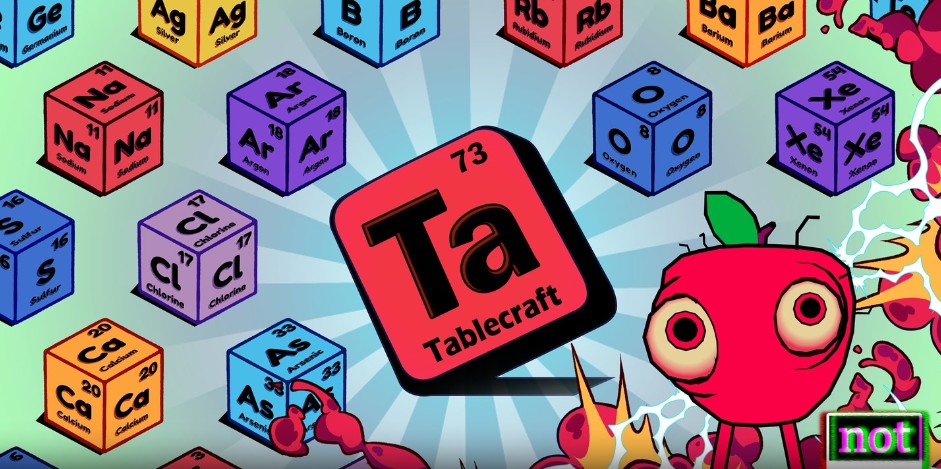
Tablecraft
Tablecraft
A free VR mad-science sandbox — combine real elements from the Periodic Table to craft over 80 recipes, discover 900+ isotopes, manage radioactive decay, run a lab shop, and feed your inventions to a mutant creature. Science never looked this fun.
What Is It?
Tablecraft is a free VR science sandbox from Not Suspicious — a two-person indie studio founded by UCF/FIEA alumni and Fulbright Scholars Rafael Brochado and Guillaume Bailey. It has been in development since 2017, backed by a $1 million National Science Foundation grant, and launched on the Meta Quest Store in January 2025. It won a Games for Change 2025 Award — recognition that places it among the most distinguished educational games of its year.
The core concept is deceptively simple: you combine atomic blocks representing real chemical elements to craft physical objects, using a device called the Pro-Craftinator. The Periodic Table is your ingredient list. The chemistry is real — element properties, atomic mass, group behaviour, isotope variants, and radioactive decay all behave consistently with actual chemistry. But the framing is anything but a textbook: this is a mad-scientist sandbox where helium makes things float, radium makes things glow (and makes other blobs ill from radiation poisoning), and you feed your creations to a mutant creature in your lab.
The result is something genuinely unusual in chemistry education: an experience that makes the Periodic Table feel like a toybox rather than something to memorise — while still teaching students real element properties, atomic masses, groups, and isotope behaviour through direct interaction.
How It Works
The Chemistry Inside the Game
Tablecraft teaches chemistry through direct experience rather than instruction. Students who spend time with it will absorb the following, whether they realise it or not:
What People Are Saying
"In the 30 years I've been teaching, I believe Tablecraft is effective at engaging students who aren't passionate about the classroom environment — including students who have learning disabilities and those who are normally hardest to motivate."
"Our volunteers often report particularly long lines of both adults and children interested in playing it. We love the way you've turned the Periodic Table into something that's tangible, fun and interactive for students and visitors. Your work aligns excellently with our own ongoing efforts and mission to inspire science learning for life."
Games for Change is the world's leading not-for-profit dedicated to games for social impact. A 2025 award from this organisation places Tablecraft among the most recognised educational games of its year — evaluated against games from major studios worldwide.
Who It Works Best For
Tablecraft has a particular strength that deserves direct attention: it reaches students who conventional chemistry teaching doesn't. The teacher testimonial above — from someone with 30 years of classroom experience — specifically calls out students with learning disabilities and those who are hardest to motivate as being especially engaged.
This is not an accidental effect. The NSF-funded research behind the game was specifically designed to address the problem of chemistry being perceived as difficult and inaccessible for first-time learners. The game targets exactly the students most at risk of being put off chemistry at the point of first contact — typically around Year 9 when the Periodic Table first appears in earnest.
What to Be Aware Of
XR School Scores
Tablecraft is the most distinctive chemistry app in this review series — a sandbox with genuinely good science that has been six years in the making, backed by $1 million in NSF funding, and designed with a specific mission: make the Periodic Table feel like a toybox. It reaches students that conventional chemistry teaching doesn't, which makes it especially valuable as a classroom tool. It is free, works on Quest 2, and won a Games for Change 2025 Award. The early access status and lack of built-in curriculum are the only honest caveats. Install it, use it at the start of a Periodic Table unit, and let the mutant pet do the rest.
Not Suspicious actively seeks feedback on their Discord channel and tests Tablecraft with real students and science centre visitors. If you use it in a classroom, consider sharing your experience with the developers.
notsuspicious.biz/tablecraft →Tablecraft has been awarded a $1 million grant from the National Science Foundation to support its development as a VR first-exposure tool for physical sciences. NSF education funding requires peer review and demonstrated research value — this is serious institutional validation.