
Experiencesscience

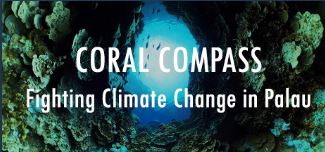
Coral Compass: Fighting Climate Change in Palau

The XR SchoolExperiencesScience › Coral Compass
★ Free Stanford VHIL Tribeca 2018 Official Selection PC VR only • ~7 minutes
Stanford University Virtual Human Interaction Lab • Released 2018 • Observer.com: "Best of Tribeca" • Inspired Palau passport pledge

Coral Compass:
Fighting Climate Change in Palau

A seven-minute 360° film from Stanford's Virtual Human Interaction Lab, taking you underwater and above the surface in Palau, Micronesia — one of the world's most biodiverse coral reef systems — to witness both the beauty of what is at stake and the adaptive policy response of a small island nation to global climate change.

Developer: Stanford University VHIL
Price: Free
Duration: ~7 minutes
Platform: Steam (PC VR) • Meta Rift (PC VR)
Real-world policy impact: Footage from Coral Compass contributed to changes in Palau's tourism policy. In December 2017, Palau became the first country in the world to implement a passport pledge for environmental protection. The experience has been used for environmental education research at Stanford and was featured by the Ocean Conservancy at Super Bowl LIV in Miami, 2020.
7.5
/10
XR School Score
Recommended
Free • Stanford VHIL research • Tribeca Film Festival 2018 Official Selection • 87% Steam positive • Genuine policy impact story • PC VR only • 7 minutes • 360° video not interactive
87% Steam positive Steambase 94/100
Tribeca Film Festival 2018
Overview

Coral Compass: Fighting Climate Change in Palau was produced by the Virtual Human Interaction Lab (VHIL) at Stanford University — the research group led by Professor Jeremy Bailenson, whose work on VR's capacity for empathy generation and behaviour change is among the most cited in the field. The experience was selected as an Official Selection of the Tribeca Film Festival in 2018, where Observer.com described it as "the best (and shortest) of the virtual reality experiences on offer."

The format is a seven-minute seated 360° film, not an interactive application: you are a passenger through the experience rather than an actor within it. The film takes you to Palau, a small island nation in Micronesia whose economy depends heavily on the coral reef tourism its extraordinary marine biodiversity supports. You witness the reefs both in their living, biodiverse state and in the context of the bleaching pressures climate change has placed on them — and then you see the policy response: the Palau passport pledge, which became legally binding in December 2017, requiring all visitors to sign a commitment to environmental responsibility upon entry.

The Palau Passport Pledge: A Curriculum-Ready Policy Story In December 2017, before this experience was publicly released, Palau became the first country in the world to implement a formal passport pledge for environmental protection. Every visitor must sign a commitment to act as a responsible visitor and protect the natural environment, stamped directly into their passport. This is a real, legally enacted policy that was partly driven by the kind of awareness-raising Coral Compass was built to achieve. For Geography and Citizenship teachers, this is exactly the type of concrete real-world example — a small Pacific island nation taking meaningful, internationally recognised environmental action — that anchors abstract climate change discussions to genuine human decision-making and policy. The VHIL notes that footage from Coral Compass had a direct impact on these tourism policies.
Curriculum Links
🌎
Geography: Climate Change
Ocean warming, coral bleaching, sea level rise threat to low-lying Pacific nations. Palau as a case study for climate vulnerability of small island developing states (SIDS). GCSE and A-Level direct curriculum link.
🧬
Biology: Coral Ecology
Coral reef ecosystems, symbiotic relationships (coral-zooxanthellae), bleaching caused by thermal stress, ocean acidification effects on calcification. A-Level Biology, GCSE Combined Science.
🌍
Citizenship / PSHE: Global Justice
Climate equity: small island nations with minimal carbon emissions bearing the highest consequences. Palau passport pledge as an example of local policy action in response to a global problem. RSE/PSHE and Politics.
🏫
Film / Media Studies
Coral Compass's Tribeca selection and its use by the Ocean Conservancy at Super Bowl LIV make it a usable case study in environmental documentary filmmaking and the role of immersive media in advocacy.
Curriculum Value Ratings
Geography (climate change)
9.2
Biology (coral ecosystems)
8.4
Citizenship / global justice
8.8
Academic credibility (Stanford)
9.6
Interactivity / student agency
2.2
Honest Constraint: 360° Video, Not Interactive — And PC VR Only Coral Compass is a seven-minute film, not an application. Students are seated passengers through the experience with no agency within it — there is nothing to do, and the experience ends automatically. This is a meaningful distinction from interactive VR science experiences: it functions more like a very high-quality documentary viewed through a headset than a lesson tool students can explore at their own pace. The critical VR-Shop review noted this directly, describing it as "more an eco-rant with some nice visuals." A fair counter is that the visuals are genuinely striking and the VHIL's research tradition shows that passive 360° immersive content can be highly effective at generating empathy and attitude change, even without interactivity. Critically: this experience is PC VR only (Vive, Valve Index, Oculus Rift via Steam or Oculus Rift store) — it does not run on standalone Meta Quest headsets. Schools with Quest-only deployments cannot use this title.
What Critics and Reviewers Say
Observer.com (John Bonazzo) — Tribeca Film Festival 2018Festival standout
"Coral Compass: Fighting Climate Change in Palau [is] the best (and shortest) of the virtual reality experiences on offer at this year's Tribeca Film Festival."
Stanford VHIL (official)Real-world impact
"Footage from Coral Compass along with the work of marine scientists has had a direct impact on tourism policies in Palau. In December 2017, Palau became the first country to implement a passport pledge for environmental protection. We continue to utilize it for environmental education research and outreach."
Steam community (87% positive)Positive user reception
The overwhelming majority of the small but consistent body of Steam reviewers find the experience worthwhile for its environmental message and visual quality in an underwater coral environment.
VR Shop (critical review)Honest critique
"Coral Compass: Fighting Climate Change in Palau is a 7 minute 360 video about the effects of climate change on a coral reef of Palau. There isn't a whole lot of educational content here — it is more an eco-rant with some nice visuals... it is no game and most people won't learn anything new." This represents a fair minority view: worth reading before deploying to calibrate expectations.
Strengths and Limitations
Strengths
  • Free — zero cost to deploy
  • Produced by Stanford VHIL — highest possible academic credibility
  • Tribeca Film Festival 2018 Official Selection
  • Real policy impact: contributed to Palau's world-first passport pledge
  • Geography, Biology, and Citizenship curriculum all directly addressed
  • Ocean Conservancy, Super Bowl LIV 2020 platform
  • 87% Steam positive • Steambase 94/100
  • Seated / no motion sickness risk
Considerations
  • PC VR only — will NOT run on standalone Meta Quest
  • 7 minutes — not self-sufficient as a lesson; needs teacher framing
  • 360° video: no interactivity or student agency within the experience
  • Released 2018 — no updates; visuals reflect that era of 360° video
  • Only 16 Steam reviews — small validation pool
Free
PC VR only • Vive, Index, Rift • ~7 minutes
Download on Steam (free) → Stanford VHIL page →
Quick Facts
Developer
Stanford University VHIL
Price
Free
Released
2018
Format
360° film (~7 minutes)
Platform
Steam (PC VR) • Oculus Rift (PC)
Standalone Quest
Not supported
Play position
Seated (Green comfort rating)
Steam rating
87% positive (16 reviews)
Festival
Tribeca Film Festival 2018 Official Selection
Policy impact
Palau passport pledge (Dec 2017)
Verdict
A free, Stanford-produced, Tribeca-selected seven-minute 360° film that earns its place in any Geography, Biology, or Citizenship lesson on climate change through the strength of its academic provenance and its real-world policy impact story. The Palau passport pledge — the world's first nationally implemented environmental passport commitment — is a concrete, classroom-usable example of policy response to climate vulnerability that the experience delivers with genuine visual power. The honest limitations: it requires PC VR hardware (not standalone Quest), it is a passive film rather than an interactive experience, and at seven minutes it needs careful teacher framing before and discussion after to be pedagogically worthwhile. Within those constraints, it remains one of the most credible short-form VR experiences available for climate and conservation education.