
history

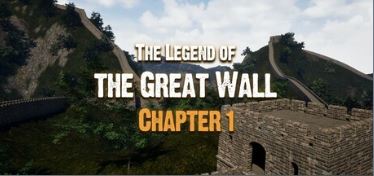
THE LEGEND OF THE GREAT WALL CHAPTER 1

Home Humanities History The Legend of the Great Wall
🏯
🏹
🏯 History · China · Ancient Civilisations · Cultural Heritage · PC VR · Steam
⚔️ Western Zhou to Ming Dynasty · Guided Mode · Free Explore · Beacon Fires · Lantern Riddles

The Legend of the Great Wall — Chapter 1

Stand on the ancient bricks of the Great Wall of China — surveying the millennia-old dragon-shaped wonder — then dive into Western Zhou battlefields, light beacon fires to send military signals across the mountains, and witness the legends that grew around one of humanity's most extraordinary engineering achievements. A cultural and atmospheric VR journey spanning 2,000 years of history, from the Wall's earliest origins to its Ming-era pinnacle.

Check Steam for price PC VR · Steam Quest 2/3/Pro via Link Guided & Explore modes Education category
Get on Steam
🏯 Atmospheric Experience — Not a Game

The Legend of the Great Wall is explicitly designed as a cultural and atmospheric VR journey rather than a traditional game. The developers are clear: "If you are looking for a fast-paced, progression-driven VR game, this experience may not be for you." Combat is symbolic and atmospheric, decisions are interpretive rather than strategic. It is closer to an interactive museum experience or guided VR field trip than to a history game. This is a feature for schools, not a limitation.

XR Rating
4.2
⭐⭐⭐⭐
Platform: PC VR · Steam (Quest via Link)  ·  Category: Education  ·  History: Western Zhou Dynasty to Ming expansion  ·  Modes: Guided (classroom) · Free Explore
About the Experience

What is The Legend of the Great Wall?

The Legend of the Great Wall Chapter 1 is an immersive VR educational experience that recreates the history, architecture and legendary stories of the Great Wall of China through virtual reality. It spans the full arc of the Wall's construction — from its earliest origins in the Western Zhou Dynasty (c. 1046–771 BC) through the Qin unification that created the first continuous barrier, all the way to the Ming Dynasty (1368–1644 AD) expansion that produced the iconic stone Wall most visitors see today.

The experience is available on Steam in the Education category, and runs on PC VR with a wide range of headset support — including Meta Quest 2, Quest 3 and Quest Pro via Oculus Link or Air Link, as well as HTC Vive, Valve Index, Pico 4 and many other SteamVR headsets. It is designed for two distinct audiences: classrooms using Guided Mode with narration, and independent learners using Free Explore Mode for self-directed discovery.

The case for VR here: The Great Wall is one of the most visited sites on Earth — and one of the least understood. Most people know it as an image rather than a physical experience. Standing on the Wall in VR — looking along its ridgeline course over mountains, seeing the watchtowers recede into the distance, feeling the scale of the battlements — creates a spatial understanding of the structure's geography that photographs and textbooks simply cannot. The Wall's route was determined by the terrain it followed; understanding why requires experiencing that terrain. VR makes that possible for students who will never visit China.

The final section of the experience presents a near life-scale reconstruction of the Great Wall, designed to create a strong sense of presence — standing atop watchtowers, looking across ridgelines, and experiencing the Wall as a physical space rather than a distant monument. This is the experience's strongest educational moment: the sheer scale of what was built, and why, becomes viscerally comprehensible in a way no image achieves.

Features

What the Experience Includes

🏹
360° Time Travel — Western Zhou Battlefields
Step into the Western Zhou Dynasty battlefield and repel invaders with bow and arrows — atmospheric and symbolic combat that places you inside the moment the Wall's construction was first seriously considered. This is not skill-based action but rather a historical immersion: what did the threat feel like, and what drove the decision to build?
🔥
Light the Beacon Fires
One of the experience's most distinctively educational interactive moments — lighting the beacon fire system that allowed military signals to travel hundreds of kilometres along the Wall in hours. This ancient telecommunications network is a remarkable example of pre-modern systems thinking, and experiencing it in VR (rather than reading about it) makes the ingenuity genuinely tangible.
⚖️
Role-Playing & Decision-Making
Become a Western Zhou soldier facing the pivotal choice of whether to advocate for building the Wall — each decision offering an interpretive "what-if" perspective on how individual choices shape the course of historical events. This is not a branching strategy game; it is a reflective exercise in historical thinking — exactly the kind of perspective-taking that good history education demands.
🏮
Lantern Riddles & Fragment Collection
Solve lantern riddles and collect historical fragments as part of the learning journey — adding an element of discovery and active engagement to what might otherwise be a passive viewing experience. These interactive elements are designed to keep learners engaged while reinforcing historical content rather than providing artificial game-style challenge.
📖
Great Wall Legends as VR Scenes
Several famous legends associated with the Great Wall — including the story of Meng Jiangnu, whose husband died building the Wall and whose tears caused a section to collapse — are presented as VR scenes you can step into. Rather than passive retelling, the experience allows you to witness and participate in symbolic moments, blending myth, memory and atmosphere. These legends are culturally significant and appear in Chinese literature and education; encountering them in VR makes them accessible to non-Chinese students in an emotionally resonant way.
🏯
Near Life-Scale Wall Reconstruction
The final section presents a highly realistic reconstruction of the Great Wall at near life scale — watchtowers, battlements, ridgeline courses and all. Standing atop a watchtower and looking along the Wall as it disappears over mountains in both directions is the experience's most powerful moment — the spatial comprehension of what this structure actually is, how it relates to the landscape it follows, and what it must have felt like to defend it.
🎓 Guided Mode
Narrated tour designed for classroom settings. The guide leads students through the historical periods and key moments with explanatory commentary. Ideal for structured lessons where the teacher wants to ensure specific content is covered.
🧭 Free Explore Mode
Wander the Wall at your own pace — enjoy aerial views, find hidden details, participate in mini-games. Ideal for independent study, enrichment sessions or students who want to revisit specific areas after the guided experience.
Curriculum Fit

School & Curriculum Value

KS3 History (China)
92%
KS4 Ancient Civilisations
85%
Geography (physical / human)
78%
Engagement
88%
Ease of use
80%
PC VR accessibility
60%

The Legend of the Great Wall is an outstanding fit for KS3 History units on China, ancient civilisations, or world history. The coverage of the Wall from Western Zhou (1046 BC) through Qin unification to the Ming period maps directly to typical curriculum chronology for ancient China. The beacon fire system is an excellent case study for military technology, communication and engineering in the ancient world. The decision-making scenarios provide strong material for historical empathy work and source analysis discussions — "what would you have decided, and why?" The Wall's legends, particularly Meng Jiangnu, connect history to literary and cultural tradition. For Geography, the Wall's route and the terrain it follows provide excellent physical geography material on mountain landforms, valleys and strategic landscape use. The main practical limitation is PC VR only — Quest users need Oculus Link or Air Link and a connected PC, which limits deployment flexibility compared to standalone apps.

XR School Verdict
Historical scope10/10
Education value9/10
Atmosphere / immersion9/10
Classroom suitability8/10
PC VR accessibility6/10
Interactivity6/10
Bottom line: A rare and genuinely impressive VR experience dedicated to the Great Wall of China — one of history's most significant engineering achievements and one of the most underserved topics in school history VR. The near life-scale Wall reconstruction, beacon fire interactivity, historical decision-making and legendary scene re-enactment make it an excellent KS3 history tool. PC VR only is the main practical constraint for classroom deployment. For schools with the hardware and the curriculum fit, this is a compelling and unique resource.
⚔️ Historical Timeline
Western Zhou Dynasty
c. 1046–771 BC · First defensive walls built · Beacon fire system established
Qin Dynasty
221–206 BC · First Emperor unifies China · Connects walls into one barrier
Han through Song
206 BC – 1279 AD · Expansions, repairs and new sections built over centuries
Ming Dynasty
1368–1644 AD · Stone & brick construction · The Wall tourists visit today
Pros & Cons
✓ Near life-scale Wall reconstruction
✓ 2,000+ years of history in one experience
✓ Beacon fire interactivity — genuinely educational
✓ Historical decision-making scenarios
✓ Legends told as VR scenes (Meng Jiangnu etc.)
✓ Guided mode — designed for classrooms
✓ Broad VR headset compatibility
✓ Unique topic — very few Great Wall VR apps exist
✗ PC VR only — Quest needs Link connection
✗ Atmospheric rather than action-driven
✗ Limited independent reviews available
✗ Chapter 1 only — awaiting future content
Quick Info
PlatformPC VR · Steam
Quest supportQuest 2/3/Pro via Link
PriceCheck Steam
CategoryEducation
History coveredWestern Zhou → Ming
ModesGuided + Free Explore
Legends included✓ Meng Jiangnu + others
Beacon fires✓ Interactive
Best forKS3 History · Ancient China
🏯
Get on Steam
The Legend of the Great Wall · Ch.1
© The XR School · VR & AR Apps for Education