
Biology

Surgical Robot Simulator

Home โ€บ Science โ€บ Biology โ€บ Surgical Robot Simulator
๐Ÿค–
๐Ÿฅ
๐Ÿฅ Biology ยท Medical Training ยท VR ยท Meta Quest 3 / 3S

Surgical Robot Simulator

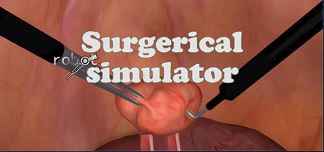
A professional-grade VR training tool for robotic-assisted surgery โ€” built by practising robotic surgeons, featuring haptic feedback, precision suturing tasks, and a companion expert-led online course.

๐Ÿ’ฒ $49.99 ๐Ÿ”ฌ Marion Surgical ๐Ÿฅฝ Meta Quest 3 & 3S only ๐Ÿ“š Includes Udemy course access
โš ๏ธ Quest 3 / 3S Required โ€” This app requires a Meta Quest 3 or Quest 3S headset. It is not compatible with the older Quest 2 or Quest Pro. Schools running Quest 2 fleets will need to upgrade before purchasing.
Overview

What Is It?

Marion Surgical Robot Simulator is a professional VR surgical training application for the Meta Quest 3 and 3S, built by Marion Surgical โ€” a company staffed and led by practising robotic surgeons. It is designed to help trainee and qualified surgeons, medical students, and healthcare professionals develop the fine motor skills and procedural familiarity needed to operate robotic surgical systems.

The simulator focuses on the key technical competencies of robotic surgery: instrument handling, precision suturing, electrocoagulation, tissue dissection, and procedural sequencing. Haptic feedback through the Quest controllers simulates tissue resistance, making the experience significantly more realistic than a purely visual simulation. 3D anatomical models are used throughout, and real-time performance metrics track accuracy, efficiency and completion time.

Uniquely, the app is paired with an expert-led online course available via Udemy, developed by robotic surgery pioneers, that provides guided instruction and contextual learning alongside the practical VR sessions. The two together represent a more complete training package than most consumer-facing medical VR apps offer.

Context

Why Robotic Surgery Training Matters

Robotic-assisted surgery (RAS) โ€” systems like the da Vinci โ€” now accounts for a significant and growing proportion of surgical procedures worldwide. Unlike traditional open or laparoscopic surgery, RAS requires surgeons to learn an entirely new motor vocabulary: operating from a console, viewing through a camera, manipulating tissue via articulated robotic arms with no direct tactile link to the patient.

The learning curve is steep, and access to practice time on actual robotic systems is severely limited by cost and theatre availability. A single da Vinci surgical robot costs over ยฃ1 million โ€” simulator access on dedicated hardware runs to tens of thousands of pounds per unit. VR training on a consumer headset at ยฃ50 represents a genuinely disruptive cost reduction, and the research literature supports XR-based training as effective preparation for real robotic procedures.

๐Ÿ“Š The research case. A 2024 systematic review and meta-analysis in BMC Surgery found that extended reality simulators measurably improve robotic novice performance, with XR-trained participants demonstrating significantly better scores on standardised assessment instruments (GEARS) compared to untrained controls โ€” and comparable outcomes to conventional physical simulator training.
Features

What It Covers

๐Ÿงต Precision Suturing
Needle handling, intracorporeal suturing and knot-tying โ€” the skills that most clearly differentiate novice from experienced robotic surgeons, and where haptic feedback is most critical.
โœ‚๏ธ Tissue Dissection
Instrument control for dissection tasks at different tissue planes, building the fine spatial awareness needed when operating via remote robotic arms.
โšก Electrocoagulation
Controlled application of electrosurgical energy โ€” a core RAS skill with significant patient safety implications if applied imprecisely in real procedures.
๐Ÿ“ณ Haptic Feedback
Controller haptics simulate tissue resistance, making force calibration a learnable skill โ€” a dimension absent from purely visual surgical simulators.
๐Ÿ“Š Performance Metrics
Real-time tracking of accuracy, efficiency and task completion time โ€” the same dimensions used in validated assessment tools like GEARS (Global Evaluative Assessment of Robotic Skills).
๐ŸŽ“ Udemy Course Companion
Expert-led online course from robotic surgery pioneers, providing instructional context, technique guidance and step-by-step walkthroughs that complement the hands-on VR practice.
Audience

Who Is This For?

This is not a school classroom app in the way the Dissection Lab or UW Virtual Brain Project are. It is a professional and near-professional training tool with a specific, narrow target audience. Being honest about that makes it easier to decide whether it belongs in your context.

โœ…
Medical students & foundation doctors
Preparing for surgical rotations or exploring a career in robotic surgery. Cost-effective skill-building between clinical sessions โ€” this is the primary audience.
โœ…
Surgical trainees & registrars
Supplementing limited OR time with targeted skills practice, particularly for suturing technique and instrument precision between theatre sessions.
๐ŸŸก
A-Level / Pre-Med students (enrichment)
A powerful careers experience for students considering medicine or surgery โ€” encountering robotic surgical technique before university. More of a vocational taster than a curriculum tool, but genuinely memorable.
โš ๏ธ
Standard school biology classes (KS3/GCSE)
Technically accessible (rated Everyone), but the content complexity and professional context mean this is not a natural fit for mainstream school biology. Students will enjoy the experience, but the curriculum link is thin.
Honest View

What to Be Aware Of

โš ๏ธ
Quest 3 / 3S only. The app does not support Quest 2, which remains the most common headset in schools. Upgrading a class set of Quest 2s to Quest 3s adds significant cost to any purchasing decision.
โš ๏ธ
Mixed user reviews. With only 2 verified reviews โ€” one 5-star and one 1-star โ€” at the time of writing, it is genuinely difficult to draw firm conclusions from community feedback. Version 1.0 was released in January 2025; the app is young.
โš ๏ธ
Udemy course sold separately. The companion online course on Udemy is not bundled with the app โ€” it is purchased independently. The full training value proposition requires both components.
โœ…
Built by surgeons, not just developers. Marion Surgical's team includes practising robotic surgeons. The simulation design reflects genuine clinical knowledge โ€” not a generic physics engine repurposed for medicine.
โœ…
Exceptional value vs. dedicated simulators. Purpose-built robotic surgery simulators (e.g. da Vinci Skills Simulator) cost ยฃ20,000โ€“ยฃ60,000 per unit. At $49.99 on a ยฃ500 headset, the cost-per-trainee case is compelling for medical schools and training programmes.
Our Verdict

XR School Scores

Educational Value (target audience) 9 / 10
For medical students, trainees and pre-med A-level students, this is genuinely excellent โ€” realistic, haptic-driven, built by clinicians, research-backed approach.
Realism & Simulation Quality 8 / 10
Haptic feedback, 3D anatomical models, and real-time performance scoring elevate this above typical consumer simulations. Not a dedicated surgical workstation โ€” but impressive for the price point.
Ease of Use 7 / 10
More demanding than consumer apps โ€” deliberate fine motor tasks require patience. The companion Udemy course significantly helps with onboarding. Not ideal for quick drop-in classroom sessions.
Classroom Fit (secondary school) 5 / 10
Strong as an enrichment/careers activity; limited as a core biology curriculum tool. Quest 3 requirement also restricts access in many schools.
Value for Money 9 / 10
At $49.99 versus ยฃ20,000+ for a dedicated robotic surgery simulator, this is remarkable value for any medical training context. Less so for a general school biology department without a clear use case.
Bottom Line

Marion Surgical Robot Simulator is a serious, clinician-built training tool that makes professional-grade robotic surgery simulation accessible for the first time at consumer headset prices. For medical students, surgical trainees, and higher education institutions with Quest 3 hardware, it represents exceptional value. For secondary schools, it is more a powerful careers and enrichment experience than a curriculum tool โ€” particularly compelling for sixth-form students with interests in medicine or engineering. It is not for Quest 2 users, and the companion Udemy course is an additional purchase to account for.

Quick Facts
Price $49.99
Developer Marion Surgical
Platforms Quest 3 & 3S only
Release January 2025
Haptic feedback Yes
Offline Yes
Language English
Age rating Everyone
Meta rating โ˜…โ˜…โ˜…โ˜†โ˜† 3.0 (2 reviews)
Audience Fit
Medical Students / HE โ˜…โ˜…โ˜…โ˜…โ˜…
Surgical Trainees โ˜…โ˜…โ˜…โ˜…โ˜…
A-Level / Pre-Med (enrichment) โ˜…โ˜…โ˜…โ˜…โ˜†
GCSE Biology โ˜…โ˜…โ˜†โ˜†โ˜†
KS3 Biology โ˜…โ˜†โ˜†โ˜†โ˜†
๐Ÿ“„ Research Backing

A 2024 systematic review & meta-analysis confirms XR simulators produce measurably better robotic surgery performance in novices โ€” comparable to conventional physical simulators. The academic case for VR surgical training is established.

Read the review (PMC) โ†’
๐Ÿฅฝ Quest 2 Users

This app is incompatible with Quest 2. If your school fleet runs Quest 2 headsets, this app is not currently an option. Check the Meta Store listing for any future compatibility updates.

Review by The XR School ยท Biology ยท Science