Overview
What Is It?
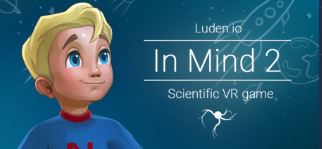
InMind 2 VR is a short free educational adventure game from Luden.io, published by Nival — a major game studio known for Heroes of Might and Magic V and the Blitzkrieg series. You play as a miniaturised scientist travelling through the brain of a teenager named John at critical moments in his adolescence, using neurotransmitters to influence his emotional responses and shape the person he becomes.
The experience runs 15–20 minutes, is on-rails (you travel a predetermined path through neural environments), and focuses on the chemistry of emotions — specifically dopamine, serotonin, norepinephrine, and GABA, and how their relative concentrations produce different emotional states. The scientific hook is unusual: the game is explicitly based on Lövheim's Cube of Emotions, a published neurobiological theory that maps combinations of monoamine neurotransmitters to specific emotions.
The developers openly acknowledge the creative inspiration was Pixar's Inside Out — and the resemblance to that film's concept (emotions as agents inside a person's head) is obvious and intentional. But where Inside Out uses characters named Joy and Anger, InMind 2 uses actual neurotransmitters and an actual published emotional model.
Science
The Science Behind It
The game's scientific foundations are more rigorous than its casual arcade presentation might suggest. Two distinct layers of neuroscience underpin it:
🧬
Lövheim's Cube of Emotions
A 2012 paper by Hugo Lövheim proposed a three-dimensional model of emotions based on the relative concentrations of three monoamine neurotransmitters: serotonin, dopamine, and norepinephrine. Each combination produces a distinct emotional state — for example, high dopamine + high serotonin + high norepinephrine maps to feelings of excitement and happiness, while low dopamine + low serotonin + low norepinephrine maps to shame and disgust. InMind 2 uses this framework to justify the game mechanic of "triggering" specific neurotransmitters at emotionally significant moments.
⚡
Neurotransmitters Covered
The game features dopamine (motivation and reward), serotonin (mood regulation and wellbeing), norepinephrine (alertness and stress response), and GABA (inhibition and calming). Each is visually represented as a distinct molecule type in the VR environment, and the player interacts with them to influence John's emotional state at key life moments.
🎬
The "Inside Out" Connection
The developers explicitly cite Pixar's Inside Out as creative inspiration — and the concept of inhabiting a character's emotional landscape from the inside clearly draws on the same imaginative territory. The key distinction is that InMind 2 replaces anthropomorphised emotions with actual neurochemistry. It is Inside Out as it would look if the characters were named Serotonin and Dopamine rather than Joy and Sadness.
🔬 Worth noting for teachers.
Lövheim's Cube is a real and published scientific model (Hugo Lövheim, Medical Hypotheses, 2012). It is controversial — like most emotion models in neuroscience — but it gives InMind 2 a genuine scientific reference point. For teachers covering neurotransmitters in A-level Biology or Psychology, this is a useful discussion hook: the game illustrates one model of how neurochemistry maps to emotional states.
Gameplay
How It Plays
InMind 2 is an on-rails VR experience — your path through the brain is predetermined, not freely navigable. The gameplay is arcade-style: as you travel through strikingly visualised neural environments, you encounter neurotransmitter molecules and must shoot or trigger them at precisely the right moments to influence John's emotional response.
Each session covers several key moments in John's adolescence — a first encounter with a girl, a confrontation with bullies, an opportunity to make a choice about his future. Your chemical interventions at these moments nudge his emotional response and cumulatively shape the adult he becomes. Multiple play-throughs lead to different outcomes for John, adding a layer of replay motivation beyond the leaderboard score.
🛤️ On-rails travel
You move along a fixed path through the brain's neural architecture. No free locomotion — comfortable for VR newcomers with no motion sickness risk.
🎯 Arcade shooting
Lock onto neurotransmitter molecules with a gaze cursor and trigger them at key moments. Timing and accuracy affect outcomes.
🔀 Decision outcomes
Your neurotransmitter choices at emotional crossroads affect John's personality development and future. Multiple endings encourage replay.
🖥️ VR optional — plays on desktop too.
The Steam version runs in both VR and non-VR desktop mode. The mobile versions (iOS/Android) use Google Cardboard or Daydream. For schools without any VR hardware, the desktop mode still delivers the journey through John's brain with the full narrative — just without the immersive headset dimension.
Curriculum
Where It Fits Educationally
InMind 2 sits at the intersection of biology and psychology — specifically the biochemistry of the nervous system — rather than mainstream chemistry. The XR School categorises it under Chemistry because of its neurotransmitter focus, but it fits more naturally in these curriculum contexts:
A-Level Biology — nervous system & neurotransmitters
A-Level Psychology — biological approach to emotion
GCSE Biology — nervous system basics
PSHE — emotional wellbeing & the brain
Psychology — theories of emotion
Enrichment / STEM careers inspiration
Its most natural use case is as a 15–20 minute stimulus for a lesson on the neuroscience of emotion — particularly for A-level Biology students covering synaptic transmission and neurotransmitters, or A-level Psychology students covering the biological approach. The Lövheim's Cube connection gives teachers a specific discussion point about models of emotion in neuroscience.
📚 Discussion starter, not a lesson.
Like Escape the Lab, InMind 2 works best as an engaging stimulus or reward activity rather than primary instruction. Students who already know what dopamine and serotonin are will get significantly more from the experience than those encountering the concepts cold. Use it after teaching neurotransmitters, not before.
Honest View
What to Be Aware Of
⚠️
Not a standalone Meta Quest app. Available on Steam (PC VR + desktop), iOS, and Android (Cardboard/Daydream). Schools with Quest headset fleets cannot use this without a PC Link connection. The mobile Cardboard version is more likely to be practically accessible in most school contexts.
⚠️
2016–17 production values. InMind 2 was built in 2016–17. By current VR standards the graphics and interaction design feel dated. The mobile Cardboard version in particular shows its age. This is not a reflection of the science but it affects the immersive impact compared to newer apps in this series.
⚠️
~15–20 minutes of content. Short by any measure. The arcade gameplay is engaging within its timeframe but there is limited depth or replayability beyond trying for different endings. Not a sustained curriculum resource.
⚠️
Lövheim's Cube is a model, not settled science. The game's emotional framework is based on a specific 2012 theory that maps neurotransmitter combinations to emotions. Like all models in neuroscience, it is a simplification that remains debated. Teachers should note this — the game is a useful illustration of the idea that neurochemistry underlies emotion, not a definitive account of how emotions work.
✅
Genuinely unique subject matter. Of all the apps reviewed in this chemistry series, InMind 2 is the only one that addresses the neuroscience of emotion. No other VR chemistry or biology app reviewed here takes students inside a brain to experience neurotransmitter function narratively and viscerally. For this specific educational territory it has no direct competitor.
✅
Free and multi-platform. Available on iOS, Android, and Steam at no cost. The iOS Cardboard version means any student with a smartphone and a basic Cardboard viewer can experience the inside of a brain — no school VR budget required.
✅
Narrative engagement with real neuroscience. John's story — a teenager navigating school, friendships, and the first stirrings of adult life — is relatable. The emotional situations feel authentic, and students who care about John's outcome are motivated to understand the chemistry that shapes it.
Our Verdict
XR School Scores
Educational Value
7 / 10
Grounded in genuine neuroscience (Lövheim's Cube) and covers four key neurotransmitters in context. Best as a discussion stimulus for A-level Biology or Psychology. Less suited to direct curriculum delivery given its short length and arcade format.
Subject Uniqueness
10 / 10
No other app in this series covers the neuroscience of emotion through an experiential VR narrative. For teachers wanting to bring neurotransmitters to life as a felt experience rather than a diagram, InMind 2 is the only option reviewed here.
Engagement & Fun
7 / 10
John's story is relatable and the neurotransmitter arcade mechanic is satisfying within its short runtime. Multiple endings encourage a second play. Neuroscience student reviewer called it "worth purchasing." Older mobile graphics show their age.
Classroom Fit (Quest schools)
3 / 10
Not a standalone Quest app. Available on Cardboard/mobile and Steam. Best deployed via phone-based Cardboard or desktop — not direct Quest fleet deployment. Short and arcade-style rather than curriculum-structured.
Value for Money
10 / 10
Completely free on all platforms. No financial barrier whatsoever.
Bottom Line
InMind 2 VR occupies a genuinely unique niche: a free, narrative-driven VR journey through the brain that uses real neurotransmitters and a published emotional theory (Lövheim's Cube) as its game mechanic. Inspired openly by Inside Out, it places students inside a teenager's neurochemistry at emotionally formative moments and asks them to shape who he becomes. The production values are 2016-vintage and the experience is short, but for A-level Biology or Psychology teachers covering neurotransmitters and the biological basis of emotion, it is an engaging and free discussion stimulus with no equivalent in the rest of this series. Download it for nothing; use it well.