
MathsPhysics

Infinity Disk

Home β€Ί Puzzles β€Ί Infinity Disk
πŸ’Ώ
🌐
πŸ’Ώ Puzzle Β· Spatial Reasoning Β· Meta Quest
πŸ†• Quest Launch April 20, 2026

Infinity Disk

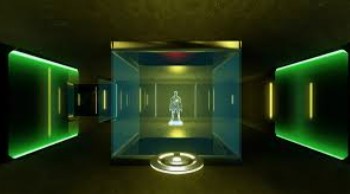
Throw a glowing disc, teleport to where it lands, catch your own throw. That single mechanic β€” deceptively simple, endlessly layered β€” forms the foundation of 12 increasingly mind-bending levels in an abstract Tron-inspired sci-fi world. Physics puzzles built entirely around spatial reasoning, trajectory and creative thinking.

~$7.99 All ages Meta Quest Β· Steam Solo developer Ralph Schaedler
Meta Store Steam (PC VR)
XR Rating
4.3
⭐⭐⭐⭐⭐
Platform: Meta Quest Β· Steam (PC VR)  Β·  Price: ~$7.99  Β·  Developer: Ralph Schaedler (solo)  Β·  Quest launch: 20 April 2026
About the App

What is Infinity Disk?

Infinity Disk is a single-player VR physics puzzle game built entirely around one brilliantly clever mechanic: throw a glowing frisbee disc, then teleport to where it lands to catch your own throw. You are, quite literally, playing frisbee with yourself β€” across an ever more elaborate gauntlet of obstacles, reflective surfaces, enemies and spatial challenges set in a sleek abstract world inspired by films like Tron.

Created by solo developer Ralph Schaedler in Stuttgart, Germany, the game first launched on PC VR in November 2018. On 20 April 2026 it arrived on Meta Quest with updated content for a new generation of standalone VR players. The core mechanic hasn't changed β€” it remains as clean and clever as it was at launch β€” but the Quest version brings the experience to a far wider audience.

For schools: Infinity Disk is a rare example of a game that builds genuine spatial reasoning skills through play. The core mechanic β€” predicting where the disc will travel, positioning yourself to receive it, planning multi-surface bounce routes β€” exercises exactly the kind of 3D spatial thinking that underpins geometry, physics, and engineering. It also models trajectory, angles and reflections in a way that maps directly to KS3 Physics and Maths content.

The game also features an Arcade mode alongside the main campaign β€” players can compete for high scores using bounce combos and speedruns, adding a replayability and competitive edge that makes it work well for classroom rotations. Frisbee physics settings are customisable, allowing teachers or students to adjust disc behaviour to explore different trajectory patterns.

Gameplay

The One Mechanic That Does Everything

The Core Loop
πŸ₯
1. THROW
Hurl the glowing disc in any direction β€” angle, force and spin all matter
⚑
2. TELEPORT
Instantly teleport to the disc's destination before it arrives
🀲
3. CATCH
Position yourself to receive your own throw β€” and repeat
As the game progresses: obstacles block direct lines. Bounce surfaces deflect the disc at angles. Environmental hazards demand precise timing. Enemies intercept your path. Multi-bounce combos become necessary. The mechanic stays the same β€” the layers compound.
πŸ—ΊοΈ
Campaign Mode β€” 12 Levels
Twelve levels that grow progressively more abstract and demanding. Early stages establish the throw-teleport-catch loop. Mid-game introduces bounce combos, reflective panels and obstacles. Later levels become genuinely spatial logic challenges β€” working out not just where to throw, but where you need to be when the disc arrives. The Quest version includes updated content beyond the original PC release.
πŸ†
Arcade Mode β€” High Scores & Combos
Replay levels chasing high scores through bounce combos and speedruns. Online leaderboards add competitive replay value β€” ideal for classroom rotations where students can try to beat each other's scores. The combo system rewards planning ahead: setting up multi-surface bounce chains scores significantly higher than direct throws.
βš™οΈ
Customisable Physics Settings
The disc's physics behaviour β€” spin rate, arc, velocity, bounce coefficient β€” can be adjusted in settings. For schools, this is genuinely useful: changing a variable and observing what happens to the disc's trajectory is hands-on physics experimentation.
Learning Value

What Does It Actually Teach?

Infinity Disk doesn't wear its educational value on its sleeve β€” it's first and foremost a fun puzzle game. But the skills it builds are real, and they're skills that are genuinely hard to teach from a 2D textbook.

πŸ“
Angles & Reflection
Every bounce off a surface demonstrates the angle of incidence equals angle of reflection β€” a core Physics principle made physically tangible.
🧭
Spatial Reasoning
Planning where to stand to receive a throw requires 3D mental rotation β€” one of the strongest predictors of STEM success and notoriously hard to develop without physical manipulation.
🎯
Trajectory & Projectile Motion
Every throw is an intuitive exploration of projectile physics β€” arc, spin, air resistance and velocity all affect where the disc lands.
πŸ”
Iterative Problem Solving
Failed throws provide instant feedback on what went wrong. Students adjust, retry and refine β€” the engineering design process in miniature, played out in seconds.
Solo dev story β€” worth mentioning: Infinity Disk was created entirely by one person β€” Ralph Schaedler, working independently from Stuttgart. For Computing and DT lessons exploring game design, app development or indie production, this is a genuine example of what a single determined developer can build. The game has been available since 2018 and is still actively maintained, now arriving on Quest eight years after its Steam launch.
Curriculum Fit

How Well Does It Fit?

KS2 (Y3–Y6)
75%
KS3 (Y7–Y9)
92%
KS4 (Y10–Y11)
78%
Engagement
90%
Ease of use
88%

Strongest fit is KS3 β€” the angles, reflection and spatial reasoning content maps most directly to Year 7–9 Maths (geometry, angles) and Physics (forces, motion, reflection). It works well from upper KS2 upward β€” the mechanic is immediately intuitive and accessible to younger students, with later levels providing genuine challenge for older ones. At KS4, the educational relevance remains but most students will have conceptually outpaced what the game explicitly teaches.

Similar Apps

How Does It Compare?

Infinity Disk ← this
~$7.99
One clever mechanic
Spatial reasoning
Physics angles
Arcade + campaign
Gadgeteer
~$15
Rube Goldberg
Chain reactions
Cause & effect
Much more content
Puzzling Places
$14.99
3D jigsaws
Relaxed pace
Real-world places
No physics
Squingle Arcade
Free (playtest)
Spatial MR puzzles
Relaxed/accessible
Science aesthetic
No scoring
XR School Verdict
Educational value8/10
Engagement9/10
Ease of use9/10
Puzzle depth8/10
Value for money10/10
Bottom line: A beautifully elegant single-mechanic puzzler that genuinely teaches spatial reasoning, angles and reflection through play. Superb value at ~$7.99, accessible to all ages, and the solo-dev story adds a real-world computing/DT angle too.
πŸ‘¨β€πŸ’» Solo Developer

Infinity Disk was created entirely by one person β€” Ralph Schaedler, Stuttgart. Originally launched on PC VR in November 2018, still maintained and now arriving on Meta Quest in April 2026. A brilliant example for Computing and DT lessons on indie game development.

Pros & Cons
βœ“ Elegant single mechanic β€” instantly intuitive
βœ“ Teaches spatial reasoning, angles & reflection
βœ“ Arcade mode with high scores β€” great for class
βœ“ Customisable physics β€” adjust disc behaviour
βœ“ Updated Quest version with new content
βœ“ Solo dev story β€” great for Computing/DT
βœ“ ~$7.99 β€” outstanding value
βœ— Only 12 levels β€” relatively short
βœ— No teacher portal or lesson plans
βœ— No multiplayer (solo only)
Quick Info
PlatformMeta Quest Β· Steam (PC VR)
Price~$7.99
Quest release20 April 2026
PC VR release7 November 2018
DeveloperRalph Schaedler (solo)
Levels12 + Arcade mode
Age rangeAll ages (KS2+)
SubjectMaths Β· Physics Β· Computing
ModesCampaign Β· Arcade / Highscores
PlayersSingle player
πŸ’Ώ
Get on Meta Store
~$7.99 Β· All Quest headsets
🌐
Also on Steam
PC VR Β· $7.99
Β© The XR School Β· VR & AR Apps for Education