Overview
After Solitary is produced by PBS FRONTLINE and Emblematic Group — the studio led by Nonny de la Peña, widely described as "the godmother of VR journalism." It represents the first collaboration between FRONTLINE and Emblematic, and was built on the back of three years of rigorous investigative reporting by FRONTLINE producers Dan Edge and Lauren Mucciolo into solitary confinement at Maine State Prison, which had previously produced the broadcast documentary "Last Days of Solitary."
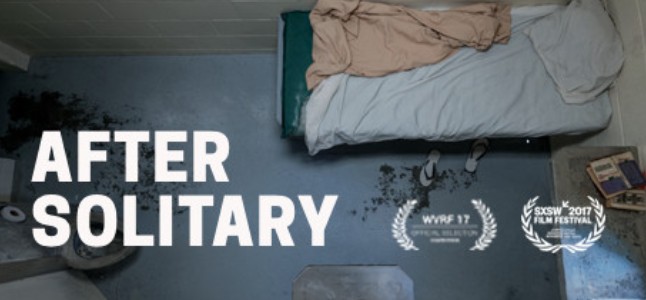
The experience is technically significant: it is not a 360° video but a genuine room-scale walk-around experience. Thousands of photographs of the actual solitary confinement cell at Maine State Prison were stitched into a photorealistic 3D environment using photogrammetry. Kenny Moore — who spent five-and-a-half years in solitary confinement at Maine State Prison, and nearly 20 years in and out of prison — was filmed using volumetric capture (videogrammetry) at 8i studios, then placed into the 3D cell as a hologram-like figure the user can move around and look at from any angle. The user can stand inside the actual dimensions of a solitary cell with Kenny present as a holographic presence, hearing his account from within the space where it happened.
The Technical Achievement: Walking Around a Real Cell With a Holographic Survivor
The distinction between After Solitary and a 360° documentary video is worth understanding before deploying it with a class. In a 360° video, the viewer is fixed at a camera point. In After Solitary, the user is inside a geometrically accurate photogrammetry scan of the real cell — they can walk to the door, sit on the bunk, look up at the narrow window, and position themselves wherever they choose while Kenny narrates. Kenny himself appears as a volumetric hologram — a three-dimensional figure the user can view from any angle. This gives the experience a presence and proximity that passive 360° viewing cannot produce, and is directly why USC's Media Impact Project chose it to study the differential empathy effects of room-scale VR versus 360° and 2D video formats.
The two environments in the experience are carefully chosen: the solitary confinement cell (where most of the experience takes place) and Kenny's bedroom after his release — where he has cordoned himself off from the world, recreating the isolation of his confinement in the space of his own home. FRONTLINE noted this juxtaposition was specifically designed to make viscerally legible the lasting psychological consequences of long-term isolation, in a way that two-dimensional storytelling could not achieve.
Awards and Recognition
🏆
SXSW 2017 — Grand Jury Prize, Best Room Scale VR. The festival jury award specifically recognised the room-scale format as the decisive element of the work, not just its content.
🌈
World VR Forum, Davos — Imperial Crown. The top prize at the Swiss VR Forum, reflecting international recognition of the work's significance to VR journalism as a field.
📰
Online Journalism Awards (ONA) — Excellence in Immersive Storytelling. The ONA award recognises the piece's journalistic rigour alongside its technical innovation.
🎞
Screened at: SXSW, Seattle International Film Festival (SIFF), AFI Docs, Future of StoryTelling (FoST), Camden International Film Festival.
📋
USC Media Impact Project research study. Formally evaluated by USC for differential empathy and attitude-change outcomes comparing room-scale VR vs 360° video vs 2D video — among the earliest peer-reviewed studies of VR journalism's impact on audiences.
Curriculum Links
⚖
Citizenship / Law (KS4+)
Solitary confinement as a contested penal practice. US vs UK policy comparison. The Maine State Prison reform case (reduction of solitary, introduction of rehabilitation classes, drop in violence since 2011). Human rights frameworks.
🧠
Psychology / PSHE
Psychological effects of prolonged isolation: anxiety, disorientation, self-harm, difficulty reintegrating. Research on solitary confinement and recidivism rates. Connects to A-Level Psychology content on deprivation and institutional behaviour.
📄
Media Studies / Journalism
Case study in immersive journalism: photogrammetry, volumetric capture, room-scale narrative. Emblematic Group's editorial approach to accuracy, fairness, and transparency in recreated scenes. FRONTLINE's investigative reporting methodology.
📚
English / Sociology
First-person testimony as documentary form. Comparing VR experience with written memoir or broadcast documentary. Sociological frameworks for understanding incarceration, recidivism, and social exclusion.
The USC Research: Evidence for VR's Empathy Advantage
USC Media Impact Project: Room-Scale VR vs 360° vs 2D — What the Research Found
In spring 2017, the University of Southern California's Media Impact Project (MIP) conducted a formal research study using After Solitary and Greenland Melting (another FRONTLINE/Emblematic collaboration). Participants were randomly assigned to experience the same journalistic content in room-scale VR, 360° video, or standard 2D video. The study measured responses across knowledge, attitudes, and intended future behaviours through surveys and interviews. The research is among the earliest peer-reviewed investigations into whether the higher immersion of room-scale VR produces meaningfully different empathy and attitude-change outcomes than less immersive formats. For educators making the case for VR as a pedagogical tool rather than a novelty, this research provides external academic validation that the format matters, not just the content.
Curriculum Value Ratings
Citizenship / Law curriculum
9.0
Journalistic / academic credibility
9.4
Empathy / perspective impact
9.2
Age-appropriateness (general)
3.0
Age-appropriateness (KS4+, supervised)
8.6
Deployment Requirements: This Needs Teacher Preparation, Not Just a Headset
After Solitary is investigative journalism about prolonged solitary confinement, containing real prison footage of a forced cell extraction. Deploying it well in a school context requires: (1) teacher personally experiencing the full piece in advance, (2) clear framing of what students are about to experience and why, (3) active pastoral awareness of any students who may have personal connections to incarceration, (4) structured discussion planned for after the experience. It should not be used as a "try it and see" session. Within a well-prepared lesson — Citizenship, Law, Psychology, Media Studies — it is among the most powerful VR experiences reviewed on this site. Without that preparation, it can be deeply distressing without being educationally purposeful.
Strengths and Limitations
Strengths
- Free — PBS FRONTLINE public interest journalism
- SXSW Grand Jury Prize • World VR Forum Imperial Crown • ONA Award
- Photogrammetry of the real cell — not a recreation, the actual space
- Volumetric hologram of the real person — Kenny Moore, not an actor
- USC peer-reviewed research on empathy impact
- Grounded in 3 years of FRONTLINE investigative reporting
- Curriculum-ready for Citizenship, Law, Psychology, Media Studies
- Room-scale interactivity (not 360° video) — genuine spatial presence
Considerations
- Violent content — real prison cell extraction footage at climax
- KS4+ and teacher-led only — unsuitable for unsupervised viewing
- PC VR only (SteamVR, room-scale 2m×1.5m) — no standalone Quest
- Released 2017 — visual quality reflects that era
- Requires teacher pastoral awareness of students with incarceration links
- Keyboard and mouse required alongside VR headset (Steam specs)