
BiologyExperiences

Paleo Dive

The XR School › Science › Biology › Paleo Dive
£17.99 • One‑time purchase Astra Render • Indie 48 prehistoric species PC VR (OpenXR) • Desktop mode
Released 4 September 2026 • Steam • 87% positive user reviews • Five ocean eras • Photograph, sample DNA, build an aquarium

Paleo Dive

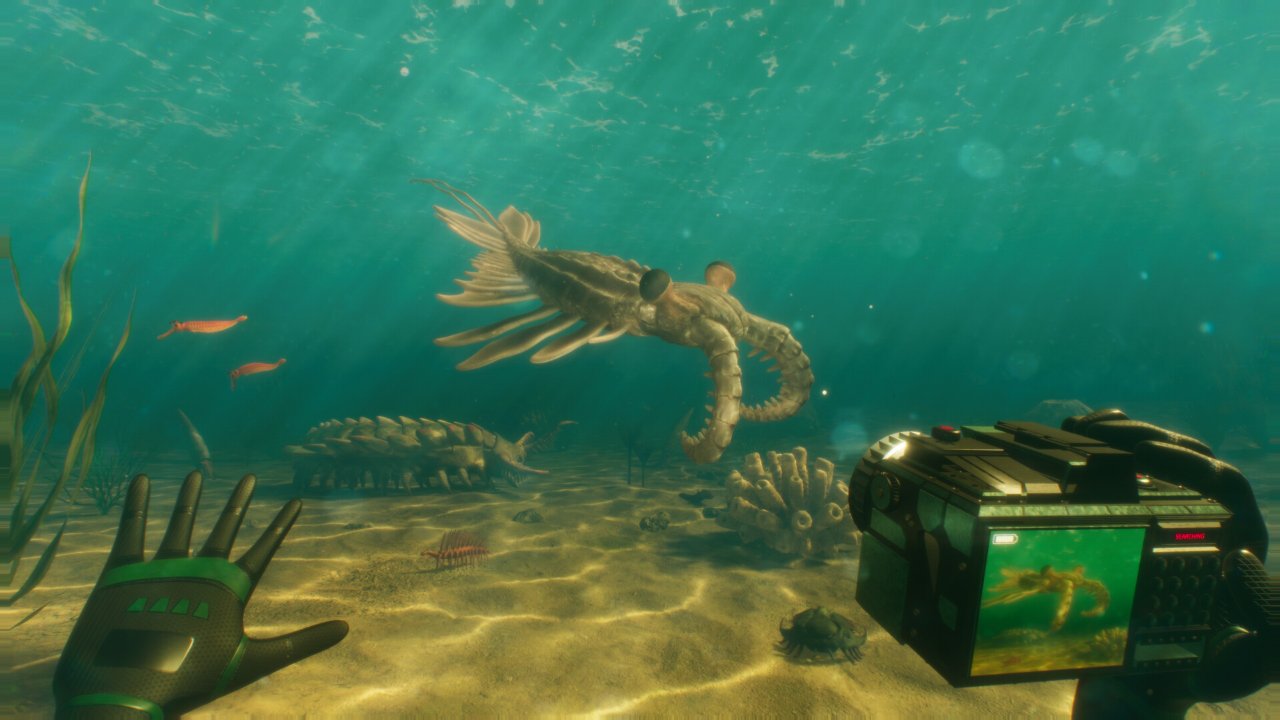
Strap on an oxygen tank and swim through oceans that vanished hundreds of millions of years ago. Paleo Dive takes you from a Cambrian lagoon to coral reefs, kelp forests and the pitch black deep sea, with a camera and a DNA scanner to document 48 prehistoric species. Part nature documentary, part survival dive, it is one of the most vivid ways yet to meet the animals behind the fossils.

Developer: Astra Render
Price: £17.99 on Steam
Platform: PC VR (OpenXR) • Windows desktop
Subject: Palaeontology • Evolution • Marine life
7.6
/10
XR School Score
Recommended
Breathtaking prehistoric oceans • Natural arm swimming • Photo and DNA research loop • Walk‑in aquarium • Easy mode for younger divers • Needs a powerful gaming PC • Light on scientific detail
87% positive • Steam 39 user reviews
Released September 2026
Overview

Paleo Dive is an underwater exploration game from independent developer Astra Render, released on Steam on 4 September 2026. It is designed around PC VR, where you swim by sweeping your arms through the water, and it can also be played on a normal monitor with a keyboard and mouse or a controller. The premise is simple and irresistible: dive into five handcrafted seas from different geological eras, spanning more than 500 million years of Earth’s history, and document the animals that lived there.

Each dive starts from a research base. You head out with a limited supply of oxygen, photograph creatures, collect DNA samples and gather fossil fragments, map pieces and coins, then return before your air runs out. Completed research unlocks new diving areas and upgrades to your swimming speed, oxygen capacity and equipment. Fully documented species can be released into a walk‑in aquarium back at base, where you can study them up close.

Fossils That Swim Most children meet prehistoric sea life as a fossil in a museum case or a picture in a textbook. Paleo Dive puts them face to face with living, moving versions at full scale: ammonites drifting past, trilobites on the sea floor and huge predators gliding out of the gloom. Early players describe exactly that reaction. One Steam reviewer wrote that they had “dreamed of diving with trilobites” since childhood. That sense of scale and presence is something no textbook diagram can deliver.
How the Research Works
📷
1. Photograph
Capture each species from three clearly different angles with the underwater camera. Your shots are saved in a personal photo gallery.
🧬
2. Sample DNA
Use the DNA scanner to gather research samples from the animals you have found, completing their scientific record.
📚
3. Study the Archive
Finished photo sets unlock a rotatable 3D specimen and information entry in the animal archive, ready to examine from every side.
🐟
4. Build the Aquarium
Species with both photo and DNA research complete can be released into a walk‑in aquarium at the research base.

A wrist display shows oxygen, depth, water pressure and remaining collectibles, while a holographic map and an unlockable “finder” help you navigate. You choose a loadout from the camera, DNA scanner, headlamp, finder and spare oxygen bottle, which adds a light layer of planning to each dive. Collecting rare Moon Rocks unlocks a night mode for every area, and reviewers single out the night dives as some of the most atmospheric moments in the game.

Easy Mode Makes It Suitable for Younger Divers On Normal difficulty, dangerous creatures can attack, and if a dive fails you lose the photos, collectibles and DNA progress from that expedition. One early reviewer described the deeper maps as genuinely frightening, almost a horror experience. Easy mode changes this completely: creatures do not attack and your progress is kept even if you run out of air. For primary age children, nervous players or classroom use, Easy mode is the right choice and turns the game into a calm, exploratory documentary.
Five Lost Oceans
Cambrian lagoonAncient coral reefsKelp forestsThe deep seaNight mode for every area48 species500+ million years

The five areas move through different geological eras, so a full playthrough becomes an informal journey through the history of life in the oceans, from the early animals of the Cambrian to much later giants. The store page does not list every species, and part of the appeal is discovering them yourself, but screenshots show ammonites, early arthropods, toothy predatory fish and huge sharks among the residents.

Paleo Dive vs theBlu
Feature
Paleo Dive
theBlu
Oceans
Prehistoric (five eras)
Modern day
Movement
Free arm swimming
Mostly stationary scenes
Activity
Photograph, sample DNA, collect, upgrade
Watch encounters unfold
Session length
Hours of progression
Short episodes
Hardware
Gaming PC (VR or desktop)
Standalone headset friendly
Best for
Independent exploration
Quick whole class wonder moments

If theBlu is the gentle introduction to the living ocean, Paleo Dive is the deeper, game driven follow up that takes the same sense of wonder back in time.

Curriculum Value
Immersion and wow factor
9.0
Engagement and progression
8.4
Link to fossils and evolution
7.2
Scientific depth
5.5
Hardware accessibility
4.0
Strengths and Limitations
Strengths
  • Beautiful, atmospheric prehistoric environments
  • Natural arm swimming feels intuitive in VR
  • Clear research loop: photograph, sample, archive, aquarium
  • Rotatable 3D specimens to study in the archive
  • Five eras give a sense of deep time and change
  • Easy mode removes attacks and protects progress
  • Night mode adds replay value to every area
  • Also playable on a normal monitor
  • 87% positive reviews from early players
Considerations
  • Needs a powerful gaming PC (RTX 3070 minimum)
  • No standalone Quest version: Quest needs a PC link
  • Deep sea areas can be frightening on Normal
  • Archive information is brief, not textbook depth
  • Most creatures follow set routes and ignore you
  • One reviewer found the in‑game camera fiddly
  • Developer discloses some AI generated 3D models
For Teachers: A Starting Point, Not a Lesson in Itself Paleo Dive is a game first, and its archive entries are short. It works best as a hook that sparks questions which you then answer in class: when did these animals live, how do we know what they looked like, what do their fossils tell us, and why did they disappear? It sits naturally alongside the Year 6 “Evolution and inheritance” topic, which covers fossils, and KS3 work on variation and adaptation. The developer notes that some 3D models were produced with AI help, and the game does not claim expert palaeontological review, so treat creature details as an artist’s reconstruction and check specific facts against a museum source. Because it needs a gaming PC, most schools will use it as a single station demo rather than a whole class activity.
£17.99
Steam • PC VR (OpenXR) or desktop • Check Steam for current offers
Get on Steam → More biology apps →
Quick Facts
Developer
Astra Render
Released
4 September 2026
Price
£17.99 (Steam)
Platform
PC VR via OpenXR • Windows desktop mode
Content
5 diving areas • 48 species
Difficulty
Easy (no attacks) • Normal
Steam reviews
87% positive (39 reviews)
Interface languages
English, French, German, Italian, Spanish
Minimum PC
Windows 10 • 16 GB RAM • RTX 3070 or RX 6800
Storage
8 GB
Players
Single player
Verdict
Paleo Dive delivers something many of us have wanted since childhood: the chance to swim alongside the animals we only know as fossils. Its photograph and DNA research loop gives exploration a purpose, the walk‑in aquarium is a lovely reward, and Easy mode makes it suitable for younger players. The scientific content is light and the hardware demands are high, so it is best used as an unforgettable hook for lessons on fossils and evolution rather than as a teaching resource in its own right. For families and schools with a capable PC VR setup, it is one of the most memorable science themed experiences of 2026.