
Freehistory

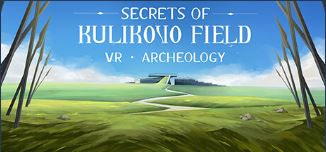
VR Archeology: Secrets of Kulikovo Field

The XR SchoolHumanitiesHistory › VR Archeology: Secrets of Kulikovo Field
Free History Archaeology PC VR Only

VR Archeology:
Secrets of Kulikovo Field

Excavate, restore, and fire: a hands-on VR archaeology expedition to the site of the 1380 Battle of Kulikovo, based on real artefacts from the Kulikovo Field Museum.

Developer: RIALAB
Price: Free
Released: November 2022
Platform: SteamVR (PC VR only)
Platform notice: This is a VR-Only title and cannot be played without a PC VR headset connected via SteamVR. It is not available on standalone Meta Quest. Minimum GPU: NVIDIA GTX 1060. Audio narration is in Russian only; English is available for interface and subtitles.
6.5
/10
XR School Score
Cautiously Recommended
Genuinely hands-on VR archaeology with real museum backing, but significant access and language barriers
Mixed on Steam 59% Positive • 27 reviews
Overview

VR Archeology: Secrets of Kulikovo Field is a free educational VR experience from Russian studio RIALAB, released on SteamVR in November 2022. Where its stablemate Krusenstern leans into narrative and text, this one puts tangible activities front and centre: you dig, sift, restore, and ultimately pick up a reconstructed medieval bow and fire it. For educational VR, that makes it meaningfully more hands-on than most history titles.

The setting is the Kulikovo Field battlefield in what is now the Tula region of Russia, site of the Battle of Kulikovo on 8 September 1380, in which Dmitry Donskoy led a coalition of Rus princes against the forces of the Golden Horde under Mamai. The battle is regarded as a foundational moment in Russian national identity, though it remains largely absent from British and American history curricula. The game approaches it through the lens of modern archaeology: the site has been excavated for decades, and scientists are still uncovering evidence of the battle.

Real Museum Research The development team visited the Kulikovo Field Museum depository and based the in-game artefacts on genuine archaeological finds from the site. Each object players encounter is a faithful recreation of items recovered during real excavations spanning many decades of fieldwork.

Players rotate through three roles: archaeologist (excavating the dig site), restoration expert (cleaning and piecing together damaged artefacts in a field laboratory), and re-enactor (handling period military equipment and practising medieval archery). The variety of activities makes it more engaging than a purely passive experience, and the archery mechanic in particular has been highlighted as a genuinely fun and memorable moment.

Audio Language Note All narration and in-game audio is in Russian. English is available for the interface and subtitles only. For non-Russian-speaking students this is a meaningful limitation, though the hands-on activities carry much of the experience without needing to understand every word.
Historical Context: The Battle of Kulikovo, 1380

The Battle of Kulikovo took place on 8 September 1380 on a field where the Nepryadva river meets the Don, in what is now the Tula region of central Russia. It was one of the largest battles of medieval Europe, involving tens of thousands of troops on both sides.

Prince Dmitry of Moscow, later known as Dmitry Donskoy ("of the Don"), led a coalition of Rus principalities against the Mongol-Tatar forces of the Golden Horde commanded by Mamai. The Rus victory, while not immediately ending Mongol dominance over Russia, is considered the beginning of the end of the Tatar Yoke and a pivotal moment in the emergence of a unified Russian national identity. Dmitry Donskoy was later canonised as a saint of the Russian Orthodox Church.

The precise location of the battle was debated for centuries and archaeological investigation of the site is ongoing. The Kulikovo Field State Museum and Reserve was established in 1996 and continues active excavation and conservation work, making it an unusually live and current archaeological site.

What You Actually Do
🥀
Archaeological Excavation
Use trowels, brushes, and sifting equipment to uncover artefacts buried in the Kulikovo Field soil. The physical hand-tracking mechanics make this the closest most students will come to genuine excavation technique in VR.
🔬
Artefact Identification and Classification
Examine recovered objects in the field laboratory, identify them against the museum's catalogue of genuine finds, and log them. Mirrors real archaeological workflow more closely than most educational apps.
🛠️
Artefact Restoration
Clean, piece together, and restore damaged artefacts using period-accurate conservation techniques. The restoration mini-games are satisfying and teach something real about how conservation archaeology works.
🏹
Medieval Archery
Reconstruct a 14th-century composite bow from components, then test it at a shooting range. Choose different arrowheads to test penetration against different types of armour. The most physically engaging activity in the experience and consistently rated as the highlight by players.
🧒
Armour Handling
Examine and handle a complete suit of 14th-century Russian warrior armour, learning about its weight, construction, and the physical demands placed on the soldiers who wore it into battle.
📹
Historical Scene Reconstruction
Witness scenes from different historical periods that the Kulikovo Field remembers, contextualising the artefacts within the broader sweep of Russian history at the site, which saw activity across multiple centuries.
Artefacts Encountered
⚔️
Swords & Blades
14th century
🏹
Arrowheads
Multiple types
🧒
Chainmail & Armour
14th century
🏭
Spears & Pole Arms
Medieval
🪙
Coins
Multiple eras
🏳️
Military Kit
Re-enactor context
Curriculum Fit
Medieval History
8.0
Archaeology Method
8.8
Russian History
9.2
UK/World History KS3
4.2
Enrichment / Extension
7.5
What Players Say
Steam Reviewer Positive
"The archery section alone is worth it. Reconstructing the bow and then actually testing it against different armour types is genuinely satisfying in VR. The museum research behind the artefacts is evident throughout."
Steam Reviewer Positive
"A fascinating slice of history that gets almost no attention in Western education. The excavation mechanics feel authentic rather than gamified. Worth the download for anyone interested in medieval Russia or field archaeology."
Steam Reviewer Negative
"Short and the Russian audio is a barrier if you don't speak the language. The subtitles help but you lose a lot of the atmosphere. Also hit some technical issues getting it to launch properly in VR mode."
Reviews sourced from Steam Community (27 reviews, 59% positive, Mixed overall rating). The review pool is very small. Both positive and critical perspectives are represented for balance.
Strengths and Limitations
Strengths
  • Completely free on SteamVR
  • Hands-on activities: excavation, restoration, archery
  • Artefacts based on genuine museum research
  • Archery mechanic is genuinely engaging in VR
  • Covers archaeological method alongside historical content
  • Unique subject matter: the Battle of Kulikovo rarely appears in educational software
  • Family Friendly rating, no violent content
Considerations
  • VR Only: requires a PC VR headset, no standalone Quest version
  • Audio narration is Russian only; English is subtitles only
  • Very low Steam review count (27) and Mixed rating (59%)
  • Some users report technical issues with VR mode launch
  • Subject is niche for UK/international curricula
  • Experience is relatively short
FREE
SteamVR only • No purchase required
Get on Steam →
⚠ VR headset required. Cannot be played without PC VR hardware. Not compatible with standalone Meta Quest.
Quick Facts
Developer
RIALAB (Russia)
Price
Free
Platform
SteamVR (PC VR only, VR required)
Released
November 2022
Audio
Russian only
Subtitles
English, Russian, Chinese
Steam Rating
Mixed • 59% (27 reviews)
Age Rating
Family Friendly
Play Mode
Single-player
Museum Partner
Kulikovo Field Museum Depository
Also by RIALAB This is the companion title to Krusenstern: A Stellar Sail, released the same month. Both are free SteamVR experiences covering Russian history, and both share the same PC VR and Russian-audio caveats.
Verdict
The hands-on activities set this apart from most free educational VR: actual excavation, restoration mini-games, and a genuinely fun archery range make it more than a passive history tour. The museum research behind the artefacts is evident and credible. For teachers, the barrier is real: PC VR only, Russian audio, and a subject that sits outside standard UK or international history curricula. Best positioned as enrichment for older students studying medieval history, the Mongol Empire, or archaeological method, rather than a core classroom tool.