Overview
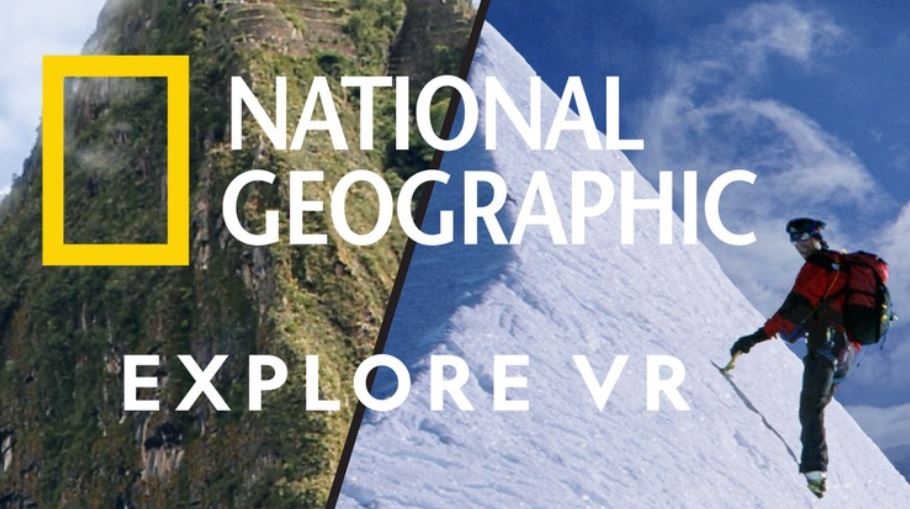
National Geographic Explore VR was developed by Force Field Entertainment B.V. (Force Field XR), the studio responsible for Anne Frank House VR, and published by Vertigo Games, which acquired Force Field and publishes titles including Arizona Sunshine. Released in May 2019 at the launch of the original Meta Quest, it carries the full National Geographic brand license and the editorial credibility that comes with it.
The experience frames you as a National Geographic photographer on assignment, accessing destinations through portals that look like the iconic yellow-framed magazine cover. Both destinations are rooted in real expeditions: NatGeo sent a four-person team to Machu Picchu for more than 12 days, taking over 50,000 photographs from multiple angles to stitch together a photogrammetric model where the real stone dimensions, textures, and spatial relationships are preserved. The result is not a digital artist's impression of Machu Picchu — it is a reconstruction of the actual site that a teacher cited as giving students "a real sense of travelling not just in space, but also time."
The Antarctic Kayak: The Standout Moment in VR Travel
Every review of National Geographic Explore VR singles out the same moment as its high point: the Antarctic kayak sequence. A kayak is lowered into icy water, you pick up the paddle, and as you begin to pull through the water the controller haptic feedback fires with a weight and precision that multiple reviewers describe as revelatory. "WOAH! It has just the perfect level of vibration and haptic feedback. You really and truly feel like you are paddling a kayak! I got goosebumps." Whales surface nearby. Penguins appear beneath the translucent water. Icebergs tower overhead. The sense of Antarctic isolation and scale is, by consensus, one of the best sustained moments in any VR travel experience available for standalone Quest.
Two Destinations, Two Experiences
A boat, a kayak lowered into icy water, a paddle in your hand. Whales breach the surface. Fish and penguins are visible beneath the translucent water. Icebergs tower above. An ice shelf wall to climb (easy route or harder route, your choice). A raging snowstorm at the summit. The search for a lost emperor penguin colony. Antarctica is the more adventure-oriented of the two destinations, prioritising physical sensation, wildlife encounters, and environmental drama over historical content.
🐛 Wildlife (penguins, whales)
🚲 Kayak haptics
⛰ Ice climbing
Geography: polar
Guided by Natalie (NatGeo editor) and José (Inca cultural guide), you match Hiram Bingham's 1911 rediscovery photographs, witness digital reconstructions showing how Inca homes were roofed and furnished (impossible to see at the real site), encounter mummy worship and sacred chicha, and meet alpacas. More guided and educational than Antarctica; less freeform. Two bounded areas within the citadel rather than free exploration of the full site.
🏭 Photogrammetric ruins
📷 Hiram Bingham photos
🇮🇳 Inca culture
History: pre-Columbian
Curriculum Links
🌎
Geography: Polar Environments
Antarctic ecosystem, ice formation, polar climate, wildlife adaptations. Emperor penguin colony behaviour. Climate change context (ice shelf, glacial retreat). GCSE and A-Level Geography (glaciation, cold environments unit).
📚
History: Pre-Columbian Civilisations
Inca civilisation, Machu Picchu construction (15th century), Hiram Bingham's 1911 rediscovery, Inca social structures including mummification and ancestor worship. KS3 History, GCSE History wider world.
🧬
Biology: Polar Ecosystems
Antarctic food chain, adaptation of emperor penguins and whales to polar environments, underwater ecosystem visible through ice. Connects to KS3/GCSE Biology ecology units.
🌐
MFL / Cultural Studies
Peruvian cultural heritage, Spanish-language geographic context. The digital Inca guide José provides cultural perspectives on Machu Picchu beyond what Western historical narrative typically emphasises.
Curriculum Value
Geography curriculum fit
8.8
History curriculum fit
8.4
Sense of place / presence
9.0
All-ages accessibility
9.0
Replay / ongoing engagement
5.0
Exploration Is Bounded: Not an Open-World Field Trip
One consistent review note worth communicating to teachers before deployment: the explorable areas within Machu Picchu are tightly limited to two locations within the citadel, not a free-roam of the full site. You cannot walk from the terraces to the Intihuatana Stone at will. The Antarctica experience is more physically varied (kayaking, climbing, snowstorm sequence), but it too follows a set narrative path. This is not an open-ended virtual field trip — it is a guided, linear experience closer in structure to a guided museum audio tour than a sandbox exploration tool. For teachers who want students to navigate freely and explore, this may feel constrained; for teachers who want a reliable, teacher-preparable narrative experience they can brief students on in advance, the linearity is actually an advantage.
Known Bug: Penguin Sequence Glitch on Some Headsets
Multiple community reviews report a freeze or glitch during the emperor penguin colony sequence in Antarctica, which can trap players and require reinstalling the app to proceed. This bug appears persistent and unpatched. Teachers should run through the full Antarctica experience on their deployment headsets before a session — particularly to confirm whether the penguin sequence completes normally. The Machu Picchu destination does not appear to share this issue.
What Critics and Teachers Say
World of Geek Stuff (review)Kayak standout
"If you grab this paddle and start paddling in the water, WOAH! It has just the perfect level of vibration and haptic feedback. You really and truly feel like you are paddling a kayak! I got goosebumps. If you don't want to paddle, you don't have to — the kayak is on a set course."
Laura McGinty, Ballard High School (Meta blog)Teaching impact
"Walking through the settlements and creating the digitally recreated spaces gives the viewer a real sense of travelling not just in space, but also time."
LaughingPlace.comDestination contrast
"One of these experiences is a sheer thrill filled with wonder and amazement, while the other — though similarly impressive on a visual level — is more of a guided history lesson... I can heartily recommend National Geographic Explore VR."
SideQuest playerHonest limit
"Short game. Clean visuals. Interesting and educational... Not really much replay in Machu Picchu." This is the consistent honest note: a single playthrough of several hours, with limited reason to repeat.
Strengths and Limitations
Strengths
- National Geographic brand • Editorial credibility and accuracy
- Photogrammetric Machu Picchu from 50,000+ real photographs
- Antarctic kayak haptic feedback • Widely praised as a standout VR moment
- Digital Inca reconstructions show interiors impossible to see at real site
- 3.9/5 from 1,502 Meta reviews • Monolith Award: Best VR Experience
- All ages, all Meta Quest models (Quest to Quest 3)
- $9.99 for both destinations • Strong value
- Strong curriculum links: Geography, History, Biology
Considerations
- Machu Picchu bounded to two areas • Not a free-roam site
- Linear narrative structure throughout both destinations
- Penguin sequence bug on some headsets • Test before session
- Limited replay value once both destinations are completed
- Meta Quest only • Not available on Steam or PC VR
- No multiplayer (voice chat with one friend only)