
artFree

The Most Beautiful Room in the World

Home Humanities Art History The Most Beautiful Room in the World
🏛️
🎨
🏛️ Art History · Renaissance · Mantegna · Virtual Heritage · PC VR · Steam
🎭 Trompe l'oeil · Camera Picta · Mantua 1465–1474 · Palazzo Ducale

The Most Beautiful Room in the World

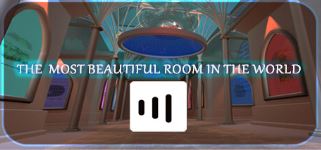
Step inside the Camera Picta — the "Wedding Chamber" of the Ducal Palace in Mantua, Italy — and experience what many art historians consider the greatest painted room in Western art. Andrea Mantegna's 1465–1474 fresco masterpiece surrounds you: illusionistic architecture, trompe l'oeil windows opening to painted skies, the famous oculus ceiling, and the court of the Gonzaga family on all four walls. Created with the support of the Palazzo Ducale in Mantua.

Check store for price PC VR · Steam Nano VR Palazzo Ducale · Mantua For artists and scholars
Get on Steam
💻 PC VR Only — Requires SteamVR

The Most Beautiful Room in the World is available on Steam as a PC VR experience — compatible with Oculus Rift, HTC Vive, Valve Index and other SteamVR-compatible headsets. Meta Quest users will need to connect via Oculus Link or Air Link to access it. It is not available as a standalone Meta Quest app.

XR Rating
4.4
⭐⭐⭐⭐
Platform: PC VR · Steam  ·  Developer: Nano VR  ·  Subject: Camera Picta by Andrea Mantegna, 1465–1474  ·  Created with: Palazzo Ducale, Mantua, Italy
About the Experience

What is The Most Beautiful Room in the World?

The Most Beautiful Room in the World is a VR heritage experience developed by Nano VR with the support of the Palazzo Ducale in Mantua, Italy. It places you inside the Camera Picta — also known as the Camera degli Sposi or "Wedding Chamber" — the extraordinary fresco cycle painted by Andrea Mantegna between 1465 and 1474 for the Gonzaga court. Art historians have long described this room as one of the supreme achievements of Renaissance painting, and the name "The Most Beautiful Room in the World" reflects that consensus.

In the physical Ducal Palace today, access to the Camera Picta is timed, crowded and restricted. You cannot look up at the famous ceiling oculus for as long as you wish, study the illusionistic architecture closely, or compare the north and west walls simultaneously. In VR, none of those constraints apply. You can stand beneath the oculus as long as you like, study each figure in the court scenes, and interact with the trompe l'oeil elements that Mantegna used to blur the boundary between painted surface and real architecture.

Why this specific room: Mantegna inaugurated a proto-technological system of visualization that transforms the viewer's perception in an immersive experience that goes beyond the mere effect of illusion. He was doing in 1465 what VR attempts to do today — dissolving the boundary between observer and observed, making the room itself the work of art. That the technology of virtual reality should be used to revisit his masterpiece is not coincidence: the Camera Picta is arguably the world's first truly immersive experience.

The experience is explicitly described as being "for artists and scholars" — reflecting its purpose as a serious educational and research tool rather than a casual entertainment experience. It is not a game. It is a carefully researched virtual reconstruction of one of Italy's most significant cultural heritage sites, created in collaboration with the institution that cares for the real thing.

The Art

Understanding the Camera Picta

To appreciate why this VR experience matters, it helps to understand what Mantegna achieved. The Camera degli Sposi in the north tower of Castel San Giorgio was entirely painted by Mantegna, who depicted his patrons in contemporary narrative scenes. The room occupied the artist from 1465 until 1474 — a long time reflecting the program's complexity and the degree of detail required.

👁️
The Oculus — The World's First Illusionistic Ceiling
Mantegna's most celebrated trompe l'oeil is at the centre of the ceiling — a fictive oculus opening to a blue sky and clouds, surrounded by a lush garland of lemons, ribbons and greenery. Dramatically foreshortened cherubs look down at you. This is thought to be the first successful example of the di sotto in sù ("from below, upward") method — the technique that would define Baroque ceiling painting for two centuries. In VR, you can look up at it indefinitely.
🏰
The Court Scenes — Gonzaga Family in Contemporary Life
Occupying the north wall, a stately scene of the Gonzaga family: Duke Ludovico and his wife Barbara surrounded by their family. All figures are regally dressed in a sea of vibrant red caps. The family's pet dog peers out from beneath the duke's chair. Flanking the door are leashed hunting dogs with their owners — the kind of intimate detail that makes the court feel genuinely inhabited.
🪟
Trompe l'oeil Architecture — Illusion and Reality
The room's arches and other architectural elements, while highly realistic, were all painted by Mantegna in a virtuosic play of optical illusion. Painted curtains are drawn back to reveal scenes. Fictive windows open to painted skies. The ceiling is adorned with busts of Roman emperors suggesting a comparison between the Gonzaga and the Ancient Roman Empire. The VR experience brings these illusionistic effects to life through interactive animations.
Mantegna's proto-VR vision: He utilized the trompe l'oeil effect, the Oculus, and cinematic painted imaging on the walls to reveal a world of fictional and symbolic situations combined with classical mythology — inaugurating a proto-technological system of visualization that transforms the viewer's perception in an immersive experience that goes beyond the mere effect of illusion.
Features

What the Experience Includes

🖼️
High-Resolution Fresco Reconstruction
The entire Camera Picta recreated in photorealistic detail — walls, ceiling, architectural elements and frames all rendered at high resolution to capture Mantegna's brushwork and the room's spatial relationships.
🎬
Interactive Animations
The trompe l'oeil effects — the painted curtains, the fictive windows, the illusionistic architecture — are brought to life through interactive animations that reveal how Mantegna manipulated the viewer's perception of depth and space.
📚
Educational Narrative
An engaging narrative unravels the historical context — covering Mantegna's life, the Gonzaga court, the symbolism of the scenes and the artistic innovations that make this room a turning point in Western art history.
🏛️
Museum-Backed Authenticity
Created with the support of the Palazzo Ducale in Mantua — the institution that cares for the real Camera Picta. This gives the reconstruction scholarly credibility that distinguishes it from purely commercial heritage simulations.
Curriculum Fit

School & University Value

GCSE / A-Level Art History
95%
KS3–KS4 History
82%
University Art History / HE
95%
Engagement
88%
Ease of use
80%

The Most Beautiful Room in the World is particularly powerful for A-Level Art History, where the Italian Renaissance is central to the specification — perspective, trompe l'oeil, patronage, court art and the role of the artist in 15th-century Italy are all directly addressed by Mantegna's Camera Picta. At university level, it serves as a genuine research and teaching tool: the institutional backing of the Palazzo Ducale gives it scholarly credibility for seminars on Renaissance visual culture, spatial representation and the history of illusionism. For GCSE History and KS3, the Gonzaga court scenes provide a vivid window into 15th-century Italian court life. The PC VR-only requirement is the main practical limitation for classroom use.

XR School Verdict
Art historical value10/10
Visual quality9/10
Educational depth9/10
Institutional credibility10/10
Ease of use7/10
Broad appeal6/10
Bottom line: A scholarly VR heritage experience of exceptional quality — a virtual visit to one of the supreme achievements of Western art, backed by the museum that cares for the real thing. Narrow in audience (Art History, History, HE) but outstanding within that audience. PC VR only. For A-Level Art History and university art history courses, there is nothing else like it on any VR platform.
🎨 Andrea Mantegna

Born in Isola di Carturo, Italy, Mantegna (1431–1506) was one of the most respected artists of the Italian Renaissance. Known for his visual experiments, he paid rigorous attention to detail.

In 1456, the Duke of Mantua, Ludovico Gonzaga, appointed Mantegna as court painter. His most important commission was the fresco cycle for the Bridal Chamber within the Ducal Palace — the royal residence of the Gonzaga family.

Pros & Cons
✓ One of the supreme works of Western art
✓ Backed by Palazzo Ducale, Mantua
✓ Interactive trompe l'oeil animations
✓ Educational narrative and context
✓ High-resolution fresco reconstruction
✓ Outstanding for A-Level / HE Art History
✓ Unique — no comparable VR experience exists
✗ PC VR only — no standalone Quest
✗ Very narrow subject — one room only
✗ Specialist audience — not for general VR use
✗ Very few independent reviews available
Quick Info
PlatformPC VR · Steam
PriceCheck Steam
DeveloperNano VR
SubjectCamera Picta · Mantegna
LocationDucal Palace, Mantua, Italy
Painted1465–1474
Created withPalazzo Ducale, Mantua
VR hardwareRift · Vive · Index · Quest+Link
Best forA-Level Art History · HE
🏛️
Get on Steam
PC VR · Camera Picta · Mantegna
© The XR School · VR & AR Apps for Education