
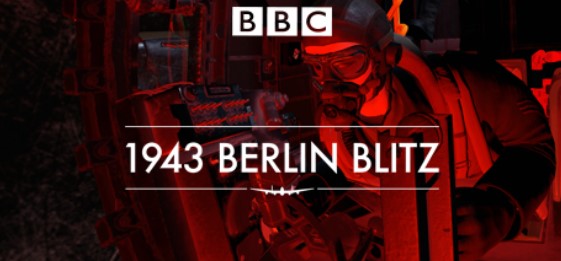
1943 Berlin Blitz
1943 Berlin Blitz
Board Lancaster bomber 'F for Freddie' and experience a night-time RAF bombing raid over Berlin, guided by Wynford Vaughan-Thomas's original 1943 BBC radio recording made during the actual mission.
IWM Duxford & IWM North
1943 Berlin Blitz is a free VR documentary produced by BBC Northern Ireland and Immersive VR Education in partnership with BBC VR Hub, released in 2018 to mark the centenary of the Royal Air Force. It places you inside Lancaster bomber 'F for Freddie' on the night of 3 September 1943, as it participates in a major night-time bombing raid over Berlin.
What makes this experience uniquely powerful is its audio. In September 1943, BBC war correspondent Wynford Vaughan-Thomas boarded the plane with his recording engineer Reg Pidsley and a microphone. The original radio programme that resulted from that flight — broadcast just hours after the plane landed safely at RAF Langar in Nottinghamshire — is the soundtrack of this experience. You are not listening to an actor reading a script. You are listening to the actual recording made in the actual aircraft during the actual raid.
The experience lasts approximately 15 minutes. It is primarily passive: you sit inside the Lancaster and look around the cabin as the raid unfolds. The crew move and communicate around you. The searchlights, anti-aircraft bursts, and night fighter attack create intense visual drama. The BBC called it one of the most immersive VR experiences they had produced. It was shown at the Imperial War Museum Duxford and IWM North, giving it institutional heritage credentials alongside its BBC origin.
By September 1943, RAF Bomber Command under Air Marshal Arthur Harris had been conducting a sustained strategic bombing campaign against German industrial and civilian targets for over two years. The Berlin raids of 1943 were part of the Battle of Berlin, a sustained offensive between November 1943 and March 1944 that sent nearly 10,000 sorties against the German capital. Losses were severe: the RAF lost approximately 625 aircraft and 2,690 aircrew killed in the Berlin campaign alone.
The Lancaster bomber that features in the experience was the primary British heavy bomber of the later war years. By 1943, Bomber Command was flying predominantly at night to reduce losses to German day fighters, relying on increasingly sophisticated navigation and bombing aids. The experience of crews — flying for six to eight hours through flak, searchlights, and fighter attacks — is what the experience attempts to convey.
- Free on Steam and Oculus
- BBC Northern Ireland + BBC VR Hub production: exceptional credentials
- Original 1943 BBC recording by Wynford Vaughan-Thomas — unreplicable primary source
- Shown at IWM Duxford and IWM North
- Marks RAF centenary 2018
- ~15 minutes: fits within a lesson activity
- Supports GCSE/A Level History WWII strategic bombing units
- Ethics of war discussions are built into the content
- Primarily passive: look around, don't interact meaningfully
- Gamepad listed as required on Steam (check current version requirements)
- Experience depicts bombing a city — teacher framing around ethics essential
- PC VR headset required; no standalone Meta Quest version
- Insufficient Steam reviews for an overall rating
- Producers
- BBC Northern Ireland • Immersive VR Education • BBC VR Hub
- Price
- Free (BBC copyright)
- Platforms
- SteamVR • Oculus Rift • HTC Vive • Windows MR
- Released
- 2018
- Duration
- ~15 minutes
- Audio
- Original 1943 BBC radio recording, Wynford Vaughan-Thomas
- Aircraft
- Lancaster bomber 'F for Freddie', 3 September 1943
- Shown at
- IWM Duxford • IWM North
- Age Guidance
- KS3+ (war content; ethical discussion advised)